

Author
Michael Benson
CEO of Cubes.Co
Memberships for Growing Teams
Choosing between coworking memberships can look straightforward until you consider how your team actually works.
A membership may provide a desk and Wi-Fi, but growing teams need more than basic access. They need the right mix of privacy, collaboration, professional facilities, location choice and room to scale. The best solution should make work easier today without boxing the business in tomorrow.
For operations managers and office managers, the decision is not simply about finding the lowest monthly rate. It is about selecting an environment that supports team productivity, strengthens culture and gives the organisation genuine workspace flexibility.
This guide explains how to compare coworking memberships and choose the right fit for teams in Melbourne, Sydney and Adelaide.
What is a coworking membership?
A coworking membership gives an individual or team access to a professionally managed workspace without requiring a conventional long-term office lease.
Depending on the provider and membership level, access may include:
- Shared work lounges
- Hot desks or dedicated desks
- Private offices or team rooms
- Meeting and boardrooms
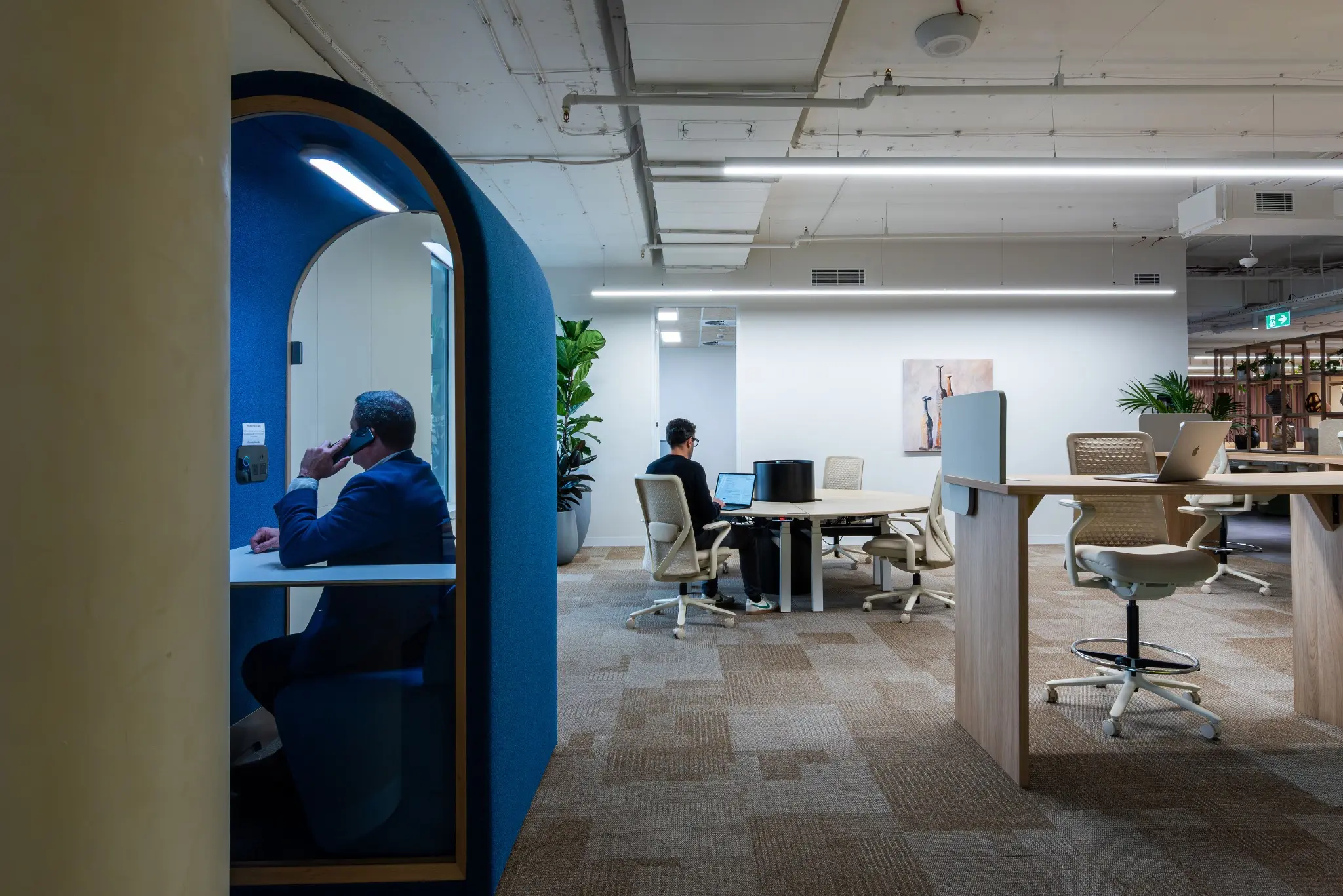
- Phone booths and focus areas
- Event spaces and communal areas
- Business-grade internet
- Reception, mail and administrative support
- Kitchens, end-of-trip facilities and shared amenities
- Access to multiple locations
- Community events and professional introductions
The strongest coworking memberships operate as complete office space solutions. They combine the practical infrastructure needed to work with the flexibility required to adapt as the team changes.
Why growing teams choose coworking memberships
Traditional leases are built around certainty. Growing businesses rarely move in a straight line.
Headcount can rise, project teams can change and hybrid attendance can make daily workspace demand difficult to predict. Taking too much space creates waste. Taking too little creates friction almost immediately.
Coworking memberships can help growing teams respond faster by offering:
- Shorter and more flexible commitments
- Faster move-in than a traditional office
- Reduced fitout and establishment requirements
- Access to fully managed business facilities
- Options to add desks, rooms or locations
- A professional environment for employees and clients
- Greater alignment between workspace use and business demand
Think of it like building a strong playing squad. You need enough capability for today’s fixture, plus the bench strength to respond when the game changes.
1. Start with how your team actually works
Before comparing providers, map the working patterns of your team.
Consider:
- How many people need workspace on an average day?
- Which days have the highest attendance?
- Does the whole team gather on specific days?
- How often are private meetings held?
- Do employees spend long periods on video calls?
- Are clients regularly invited into the workplace?
- Does the team need quiet focus space as well as collaborative areas?
- Will new employees join during the next 6 to 12 months?
This prevents a common mistake: purchasing coworking memberships based only on total headcount.
A 25-person hybrid team may not need 25 permanent desks. However, it may need a private team base, additional touchdown areas on peak days and dependable access to meeting rooms. The goal is not maximum space. It is the right space at the right time.
2. Choose the right membership model
Not all coworking memberships solve the same problem. Compare the access model as carefully as the price.
Flexible or hot-desk memberships
These memberships provide access to available desks and common work areas. They can suit mobile employees, hybrid workers, consultants and teams with light or irregular attendance.
Look for clear rules around access times, bookings, guest policies and peak-day availability.
Dedicated-desk memberships
A dedicated desk gives one person a consistent workstation within a shared environment. This model can suit employees who attend regularly and want storage, routine and a reliable setup.
Private-office or team-room memberships
Private offices provide a secure base for teams that need confidentiality, brand presence and a stronger sense of ownership. They can deliver the energy and shared amenities of coworking while protecting day-to-day privacy.
Multi-location memberships
Multi-location access can support distributed teams, travelling employees and businesses operating across Melbourne, Sydney and Adelaide. Confirm whether access is genuinely included or subject to credits, booking limits or additional charges.
The best model may be a blend. A core team can work from a private office while mobile employees use flexible access across other locations.
3. Measure genuine workspace flexibility
Workspace flexibility is more than a short agreement. It is the ability to change how much space you use, where you use it and what type of space is available.
Ask each provider:
- Can memberships be added or removed as headcount changes?
- Can the team move into a larger private office?
- Are shorter commitments available?
- Can memberships be used across multiple locations?
- Are meeting rooms booked by the hour, credit or subscription?
- What happens if the team temporarily needs more space?
- Can the solution support both permanent and hybrid employees?
Read the terms around notice periods, upgrades, downgrades and unused credits. A flexible-looking package can become rigid if the operating rules do not match your business.
4. Evaluate the collaboration benefits
One of the major collaboration benefits of coworking is the range of environments available within one workplace.
Great collaboration does not mean placing everyone in one open room. Teams need different settings for different moments:
- Informal lounges for quick conversations
- Project areas for active teamwork
- Meeting rooms for structured discussions
- Private rooms for confidential work
- Phone booths for calls
- Quiet zones for individual concentration
- Event areas for workshops, learning and team gatherings
Walk through the workspace during a normal working day. Notice whether teams can talk comfortably without disrupting others. Check whether collaborative areas are genuinely usable or simply attractive in photographs.
The environment should help ideas move while still giving focused work somewhere to land.
5. Assess the impact on team productivity
Team productivity depends on removing everyday friction.
Small problems compound quickly: unreliable internet, unavailable meeting rooms, excessive noise, poor lighting or a difficult visitor process can interrupt work repeatedly.
When touring a workspace, assess:
- Internet speed, stability and backup systems
- Availability of meeting rooms and phone booths
- Acoustic privacy and general noise levels
- Natural light, ventilation and temperature control
- Ergonomic furniture and workstation quality
- Printing, screens and presentation technology
- Access hours and after-hours procedures
- Cleaning and workplace maintenance
- Reception and visitor management
- On-site support when something goes wrong
A polished lobby is nice. A workplace that performs at 3.00 pm on a packed Tuesday is what matters.
6. Compare the complete cost, not just the monthly fee
The advertised membership price rarely tells the full story.
Request a clear breakdown of what is included and what attracts an additional charge. Compare:
- Membership and desk fees
- Meeting-room allowances
- Printing and technology charges
- Internet and utility costs
- Mail handling and business address services
- Guest access
- Event-space hire
- Parking and end-of-trip access
- After-hours access
- Security deposits and establishment fees
- Notice periods and exit costs
Then compare that total with the cost of establishing and managing a traditional office, including rent, fitout, furniture, utilities, internet, cleaning, maintenance and operational time.
Value should be measured against usefulness. A slightly higher membership can be the better commercial choice if it removes hidden costs, supports employees and gives the team room to grow.
7. Prioritise locations people will actually use
Location has a direct influence on attendance, punctuality, employee experience and access to clients.
For growing teams in Melbourne, Sydney and Adelaide, assess:
- Proximity to train, tram, bus and ferry connections
- Access to clients and commercial precincts
- Nearby food, retail, fitness and essential services
- Safety and amenity outside standard business hours
- Parking and end-of-trip facilities where required
- Availability of alternative locations for distributed staff
A workspace can offer excellent facilities, but if the journey creates daily resistance, usage may fall. The right location should make coming together easier, not feel like an away game every morning.
8. Examine the community, culture and professional environment
Community is one of the most valuable parts of coworking, but it should be practical rather than performative.
Ask how the provider helps members connect. Look for:
- Relevant member events and learning opportunities
- Introductions between complementary businesses
- A responsive on-site team
- Shared spaces that encourage natural interaction
- A professional atmosphere aligned with your employees and clients
- Opportunities to host workshops, launches or internal gatherings
The best coworking communities do not force networking. They create the conditions for useful relationships to happen naturally.
Culture also matters. Visit at different times if possible. The way the workspace feels on a quiet inspection may differ significantly from its atmosphere during peak attendance.
9. Confirm privacy, security and compliance
Growing teams may handle employee information, customer records, financial data or commercially sensitive conversations.
Ask providers about:
- Secure building and floor access
- Lockable offices and storage
- Guest registration and visitor management
- Network security options
- Private areas for calls and meetings
- CCTV and incident procedures
- Emergency planning and workplace safety
- Accessibility requirements
- Data, privacy or industry-specific needs
Coworking can be collaborative without compromising confidentiality. The key is choosing the correct membership and workspace configuration.
10. Test the service behind the space
A coworking provider is not simply supplying real estate. It is operating part of your workplace.
The on-site team will influence employee experience, client arrivals and the speed at which issues are resolved. During your assessment, notice:
- How quickly enquiries are answered
- Whether the team understands your requirements
- How visitors are welcomed
- Whether facilities are clean and well maintained
- How operational problems are handled
- Whether there is a clear escalation process
Strong service becomes especially important when an operations manager or office manager is supporting people across several cities. A capable workspace team can remove a significant amount of day-to-day administration.
A practical checklist for comparing coworking memberships
Use the following checklist to compare shortlisted office space solutions consistently.
Team fit
- Does the membership suit current attendance patterns?
- Is there enough privacy for the team’s work?
- Are focus and collaboration spaces both available?
- Can the workspace support planned growth?
Flexibility
- Can memberships be adjusted?
- Are upgrades and additional space available?
- Is multi-location access included?
- Are the notice period and commitment commercially workable?
Productivity
- Is the internet business-grade and dependable?
- Are meeting rooms and phone booths readily available?
- Is the environment comfortable and professionally managed?
- Can employees access support quickly?
Cost
- What is included in the monthly fee?
- Which services cost extra?
- Are there usage limits or expiring credits?
- What are the establishment, deposit and exit requirements?
Experience
- Is the location convenient?
- Will clients be welcomed professionally?
- Does the community align with the team?
- Does the workspace feel like somewhere people will choose to use?
Common mistakes to avoid
Choosing on price alone
The cheapest option can become expensive if meeting rooms, guest access and essential services sit outside the base fee.
Buying one permanent desk for every employee
Hybrid teams should base capacity on real attendance patterns, peak demand and the need for collaboration.
Ignoring noise and privacy
An energetic environment can support connection, but employees still need appropriate spaces for calls, confidential conversations and focused work.
Focusing only on today’s headcount
Growing teams should understand how quickly they can add memberships, expand into a larger office or use another location.
Skipping the trial day
If available, test the workspace under real conditions. Use the internet, book a room, take a call and experience the commute. A brochure shows the highlights. A working day shows the truth.
Choosing a coworking membership with corporatecubes.co/
corporatecubes.co/ helps growing businesses access professional, flexible workspace without the complexity of establishing and managing a traditional office.
Our office space solutions are designed to support focused work, meaningful collaboration and changing team requirements. From flexible access and meeting facilities to private team environments and multi-location options, businesses can choose a setup aligned with how their people work now and where the organisation is heading next.
With locations supporting teams across Melbourne, Sydney and Adelaide, corporatecubes.co/ gives operations managers and office managers a simpler way to bring people together, support productivity and scale with confidence.
Find the right workspace for your team
The right coworking membership should remove friction, create momentum and give your team the freedom to perform.
Before deciding, compare the complete offer: membership structure, workspace flexibility, productivity, privacy, service, location and total cost. Then test the space against the reality of your working week.
Explore corporatecubes.co/ locations or speak with our team about a coworking membership built around your people, operating rhythm and growth plans.
FAQ’s
What is usually included in a coworking membership?
Inclusions vary, but coworking memberships commonly provide workspace access, business-grade internet, shared amenities and on-site support. Some memberships also include meeting-room credits, printing, events, mail handling and access to multiple locations. Always request a complete inclusions and fees schedule before committing.
Are coworking memberships suitable for growing teams?
Yes. Coworking memberships can suit growing teams because they offer faster setup, shorter commitments and the ability to adjust workspace as headcount or attendance changes. Private offices and team rooms can also provide greater security and consistency within a coworking environment.
How many coworking memberships does a hybrid team need?
Base the number on actual attendance patterns rather than total headcount. Review average daily attendance, peak team days, meeting requirements and planned growth. A combination of a private team base and flexible memberships may be more efficient than assigning a permanent desk to every employee.
What is the difference between coworking and a serviced office?
Coworking typically emphasises shared areas, flexible access and community, while a serviced office generally provides a private, furnished office within a managed facility. Many modern providers combine both, allowing teams to use private offices alongside coworking lounges, meeting rooms and shared amenities.
Can coworking memberships improve collaboration?
They can. Well-designed coworking environments provide varied spaces for quick discussions, workshops, formal meetings and team gatherings. The collaboration benefits are strongest when the workspace also includes quiet areas and private rooms for focused or confidential work.
Can employees use coworking memberships in different cities?
Some providers offer multi-location access, which can help distributed or travelling teams use workspace in cities such as Melbourne, Sydney and Adelaide. Check whether access is included, credit-based or subject to booking restrictions.
What should we check before signing a coworking agreement?
Review the total monthly cost, included services, access hours, meeting-room rules, guest policy, notice period, deposit, cancellation terms, upgrade options, security and any limits on multi-location use.
Are coworking memberships tax deductible in Australia?
Workspace expenses may be deductible when incurred in earning assessable business income, but the treatment depends on the organisation and how the membership is used. Seek advice from a qualified accountant or registered tax professional about your circumstances.