
Author
Michael Benson
CEO of Cubes.Co
Creative Agency Office Space Limitations: A Beginner’s Guide
Creative agencies rarely work in a straight line.
One moment, the team is deep in production. The next, a client arrives for a presentation, freelancers join a workshop and the boardroom becomes a campaign planning space.
Traditional offices were designed around predictable headcounts, fixed desks and repetitive routines. Creative agencies need something different: a workspace that can move at the same speed as their ideas.
Understanding common creative agency office space limitations can help agency leaders choose an environment that improves collaboration, strengthens client experiences and gives growing teams more room to perform.
Why Standard Offices Can Constrain Creative Agencies
A standard office may provide desks, meeting rooms and basic amenities, but that does not necessarily make it suitable for creative work.
Agencies often manage multiple accounts, changing project teams, production deadlines, client meetings and periods of rapid growth. A rigid office can quickly become a constraint when the space cannot adapt to those demands.
Common office space constraints include:
- Fixed layouts that limit workshops and collaborative sessions
- Long-term leases that reduce financial flexibility
- Too few meeting rooms for client presentations
- Limited breakout areas for informal creative work
- Poor acoustics during calls, editing and production
- Insufficient technology for hybrid meetings
- No room to accommodate contractors or project teams
- An environment that does not reflect the agency’s brand
A conventional office might technically fit the team. The more important question is whether it supports how the team actually works.
What Makes Creative Agency Work Different?
Creative agencies rely on a mix of focus, interaction and momentum.
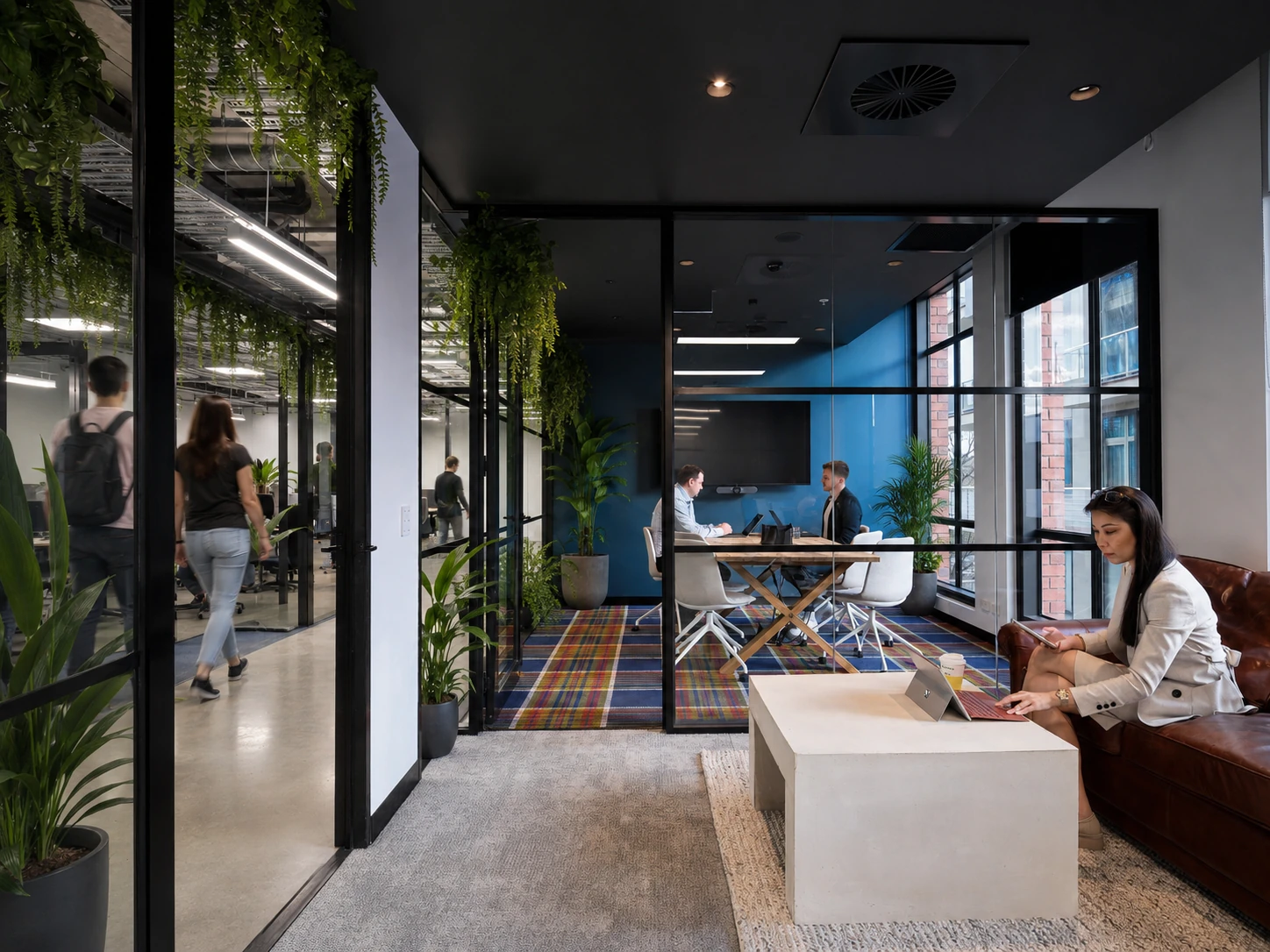
Designers may need uninterrupted production time. Account managers need polished spaces for client conversations. Strategy teams need walls, screens and writable surfaces for workshops. Leadership teams need privacy, while the broader agency benefits from energy and connection.
The best agency work environments recognise these different modes of work.
Rather than forcing every activity into the same room, the workspace should allow people to move between:
- Individual focus
- Small-team collaboration
- Client presentations
- Informal discussion
- Private calls
- Content production
- Company-wide sessions
- Social connection
Creative work is a team sport. You need space to run the play, review the footage and speak privately with the coach.
Seven Creative Agency Office Space Limitations to Avoid
1. A Fixed Layout
Many traditional offices are built around rows of desks and permanently assigned rooms. This creates a problem when an agency needs to run a campaign workshop, onboard a project team or bring several departments together.
A strong creative workspace design should allow the environment to change with the task.
Movable furniture, adaptable meeting rooms, breakout areas and shared project spaces give teams more ways to work without requiring a costly office redesign.
2. Limited Client Presentation Space
For a creative agency, the workspace is part of the presentation.
Clients form an impression before the first slide appears. An uninspiring reception area, unreliable screen or cramped meeting room can undermine the experience, even when the work itself is excellent.
Client-ready spaces should provide:
- Professional meeting and boardrooms
- High-quality screens and presentation technology
- Reliable video conferencing
- Strong acoustics and privacy
- Comfortable seating
- Easy access for visitors
- Hospitality support
- A polished arrival experience
The right environment communicates capability, confidence and attention to detail.
3. Insufficient Production Areas
Production work may involve design reviews, photography, filming, podcasting, editing or campaign planning. Trying to complete every task at a standard desk can reduce quality and create distractions for the wider team.
Agencies should consider whether a workspace provides:
- Quiet areas for editing and detailed work
- Rooms suitable for recording or virtual production
- Strong internet connectivity
- Adequate power access
- Controlled lighting
- Space for equipment and temporary setups
- Private rooms for creative reviews
Not every agency requires a permanent studio. Many simply need access to adaptable rooms that can support production when required.
4. Too Few Collaboration Zones
Collaboration does not always happen around a formal boardroom table.
Teams need places where they can quickly review concepts, refine ideas and solve problems together. When every conversation requires booking the only meeting room, creative momentum can disappear.
Effective collaborative office spaces include a balance of:
- Formal meeting rooms
- Casual breakout areas
- Writable surfaces
- Shared tables
- Project rooms
- Lounge settings
- Open areas for quick team discussions
The objective is not constant interaction. It is giving people the right setting when collaboration will improve the outcome.
5. Poor Acoustic Control
Creative agencies can be energetic environments. That energy becomes a problem when calls, presentations and informal conversations compete with focused production work.
Poor acoustics can affect concentration, confidentiality and the client experience.
A well-planned workspace should include:
- Private offices
- Phone booths
- Enclosed meeting rooms
- Quiet work zones
- Acoustic materials
- Separation between social and focused areas
Good acoustics do not remove the atmosphere. They channel it.
6. No Capacity for Changing Team Sizes
Agency headcounts can move quickly as new accounts begin, campaigns conclude or specialist contractors join the team.
A fixed lease may leave the agency paying for unused space during quieter periods. It can also create operational pressure when growth arrives faster than expected.
A flexible workspace allows agencies to adjust their footprint without immediately relocating or committing to another major fitout.
Depending on the provider, an agency may be able to:
- Add desks or private offices
- Accommodate contractors temporarily
- Book extra meeting rooms
- Access project space when required
- Expand into neighbouring offices
- Use multiple locations
- Reduce space as team requirements change
This gives agencies more control over occupancy costs while protecting their ability to grow.
7. A Workspace That Does Not Reflect the Brand
Creative agencies help clients build distinctive brands. Their own environment should reinforce that same standard.
A generic or poorly maintained office can create a gap between the agency’s positioning and the experience clients receive.
The workspace does not need to be loud or heavily branded. It should feel intentional, professional and aligned with the agency’s personality.
An agency can achieve this through:
- Branded signage and digital displays
- Curated artwork
- Flexible presentation settings
- High-quality furniture and finishes
- Thoughtful styling inside private offices
- Professional shared areas
- Memorable hospitality experiences
The goal is to create an environment that feels like an extension of the agency, not a borrowed meeting room.
Essential Workspace Features for Creative Agencies
Private Offices
Private offices give core teams a secure base while maintaining access to shared facilities and community areas.
They are particularly useful for agencies managing confidential client information, sensitive campaigns or regular internal reviews.
Meeting and Boardrooms
Agencies need a range of room sizes rather than one oversized boardroom.
Smaller rooms can support account meetings and creative reviews. Larger rooms can accommodate presentations, workshops and strategic planning sessions.
Breakout and Project Spaces
Breakout spaces allow teams to step away from their desks and approach a challenge differently. Project rooms can also help teams keep campaign materials, concepts and workstreams together.
Reliable Technology
Technology should make meetings easier, not become the opening act.
Agencies should look for:
- Fast, reliable internet
- Quality video conferencing
- Wireless presentation capability
- Accessible power and charging
- Technical support
- Secure network options
Professional Hospitality
A smooth client experience extends beyond the meeting room.
Reception support, quality coffee, catering options and well-managed visitor access can help agencies host clients professionally without placing extra pressure on their teams.
Community and Connection
Creative agencies can benefit from working around other ambitious businesses, specialists and decision-makers.
A strong workspace community may create opportunities for referrals, partnerships, talent connections and new ideas. The value comes from relevant, well-curated interaction, not networking for networking’s sake.
Multiple Work Settings
The best environments offer choice.
Team members should be able to select the setting that suits the task, whether that means a private office, quiet booth, collaborative table, lounge or meeting room.
This variety can support stronger creative team productivity by reducing the friction involved in finding somewhere appropriate to work.
Traditional Lease or Flexible Workspace?
Both models can work, but they serve different priorities.
A Traditional Office Lease May Suit an Agency That:
- Has a stable long-term headcount
- Wants complete control over its environment
- Can fund and manage a fitout
- Is comfortable with a longer commitment
- Has internal resources to manage facilities
- Requires highly specialised permanent production infrastructure
A Flexible Workspace May Suit an Agency That:
- Is growing or changing quickly
- Works with freelancers and project teams
- Wants to preserve capital
- Needs professional client-facing facilities
- Values access to multiple room types
- Does not want to manage an office fitout
- Wants the option to expand or adjust its footprint
- Benefits from a wider business community
The right decision is not simply about the monthly price. Agencies should compare the complete cost, including fitout, furniture, utilities, internet, cleaning, maintenance, meeting facilities and internal management time.
How Flexible Workspace Supports Creative Team Productivity
A well-designed workspace removes small obstacles that interrupt good work.
When teams can find a quiet place to focus, access a meeting room when clients arrive and gather quickly for a creative review, less time is lost managing the environment.
Flexible workspaces can support productivity by providing:
- Purpose-built rooms for different activities
- Less responsibility for office administration
- Space that can change with project demand
- Technology ready for hybrid collaboration
- Professional facilities for clients
- Separation between focused and social work
- Opportunities to connect with other businesses
Workspace will not create great ideas on its own. It can, however, give those ideas a better place to develop.
Questions to Ask When Comparing Creative Agency Workspaces
Before selecting a workspace, agencies should ask:
- Can the office expand if our team grows?
- Are meeting rooms available when clients typically visit?
- Is the technology suitable for presentations and hybrid meetings?
- Are there private areas for confidential work?
- Can we accommodate freelancers and temporary project teams?
- Are there quiet spaces for editing and production?
- Can the office reflect our agency’s brand?
- What services are included in the total cost?
- Can we access event or workshop spaces?
- Does the location make sense for employees and clients?
- What support is available on-site?
- Can the workspace adapt as our operating model changes?
A tour should be treated like a live test. Walk through a typical client meeting, production day and team workshop. If the space struggles during the test, it will probably struggle during the season.
Building a Better Creative Agency Work Environment
The strongest creative workspaces balance identity with flexibility.
Agencies need a professional home, but they also need the ability to change direction without rebuilding the office every time a new account, employee or production requirement arrives.
An effective workspace should help the agency:
- Present confidently to clients
- Collaborate without unnecessary friction
- Protect time for focused work
- Support hybrid employees and external specialists
- Scale its footprint responsibly
- Create a positive daily experience
- Maintain its creative identity
That balance can be difficult to achieve through a rigid, long-term office model.
Find a Workspace That Moves With Your Agency
CorporateCubes.Co provides professional, flexible workspaces designed for teams that need more than a desk and a meeting room.
With private offices, business lounges, meeting rooms, boardrooms, event spaces and on-site support, agencies can create a workplace experience that supports client presentations, production requirements and everyday collaboration.
Your agency brings the ideas. The workspace should provide the platform to move them forward.
Explore CorporateCubes.Co workspace solutions and find an environment built around the way your agency works.
Frequently Asked Questions
What are the most common creative agency office space limitations?
Common creative agency office space limitations include fixed layouts, insufficient meeting rooms, poor acoustics, limited production areas and an inability to accommodate changing team sizes. These constraints can make it harder to collaborate, host clients and complete focused creative work.
What should a creative agency look for in an office?
A creative agency should look for private work areas, collaborative spaces, professional meeting rooms, strong technology, acoustic separation and flexible expansion options. The workspace should also be accessible for clients and aligned with the agency’s brand.
How does creative workspace design affect productivity?
Creative workspace design affects how easily employees can focus, communicate and move between different tasks. Providing quiet zones, project spaces, meeting rooms and informal collaboration areas helps people select the environment best suited to their work.
Are open-plan offices suitable for creative agencies?
Open-plan offices can support communication, but they may also create noise and distraction. A balanced environment combining open collaboration areas with private offices, phone booths and quiet rooms is generally more effective.
Why is flexible workspace suitable for creative agencies?
Flexible workspace can accommodate changing headcounts, contractors, project teams and client requirements. It can also provide access to meeting rooms and shared amenities without requiring the agency to fund and manage a complete office fitout.
Can a flexible office still reflect an agency’s brand?
Yes. Private offices can often be personalised with signage, artwork, digital displays and selected furniture. Agencies can also use professional shared areas to strengthen the experience they provide to clients.
How can workspace improve client presentations?
A workspace can improve client presentations by providing high-quality meeting rooms, reliable screens, video conferencing, privacy, comfortable seating and professional hospitality. These features allow the environment to reinforce the quality of the agency’s work.
What is the difference between collaborative office spaces and open-plan offices?
Open-plan offices primarily describe a physical layout. Collaborative office spaces provide several purpose-built settings for interaction, including project rooms, breakout areas, shared tables and meeting rooms. Effective collaboration depends on choice, not simply removing walls.
How much space does a creative agency need?
The answer depends on the agency’s permanent headcount, hybrid work patterns, contractor use, meeting requirements and production needs. Agencies should assess peak usage rather than relying only on the number of full-time employees.
Is flexible workspace more cost-effective than a traditional office?
It can be, particularly when the price includes furniture, utilities, internet, cleaning, shared meeting facilities and operational support. Agencies should compare the total cost of occupancy rather than rent alone.