
Author
Michael Benson
CEO of Cubes.Co
Lets Not Limit Creativity
Creative agencies do not work like traditional businesses. Ideas move quickly, project teams change, clients arrive for presentations, and people need to shift between deep focus and high-energy collaboration throughout the day.
Yet many agencies still operate from rigid offices designed around permanent desks, fixed departments and predictable routines.
These office space limitations can quietly restrict creativity, reduce productivity and make growth harder than it needs to be. The strongest creative agency office spaces are built for movement, collaboration, concentration and client engagement, giving teams the freedom to work differently as projects evolve.
Why Creative Agencies Need a Different Kind of Office
An agency workplace must support several working styles, sometimes within the same hour.
A strategist may need silence to develop a campaign platform. The creative team may need an open area to workshop concepts. Account managers may be presenting to a client, while a production team coordinates suppliers in another room.
Standard offices rarely accommodate this level of movement. They tend to offer one primary working environment, with limited room for teams to change how and where they work.
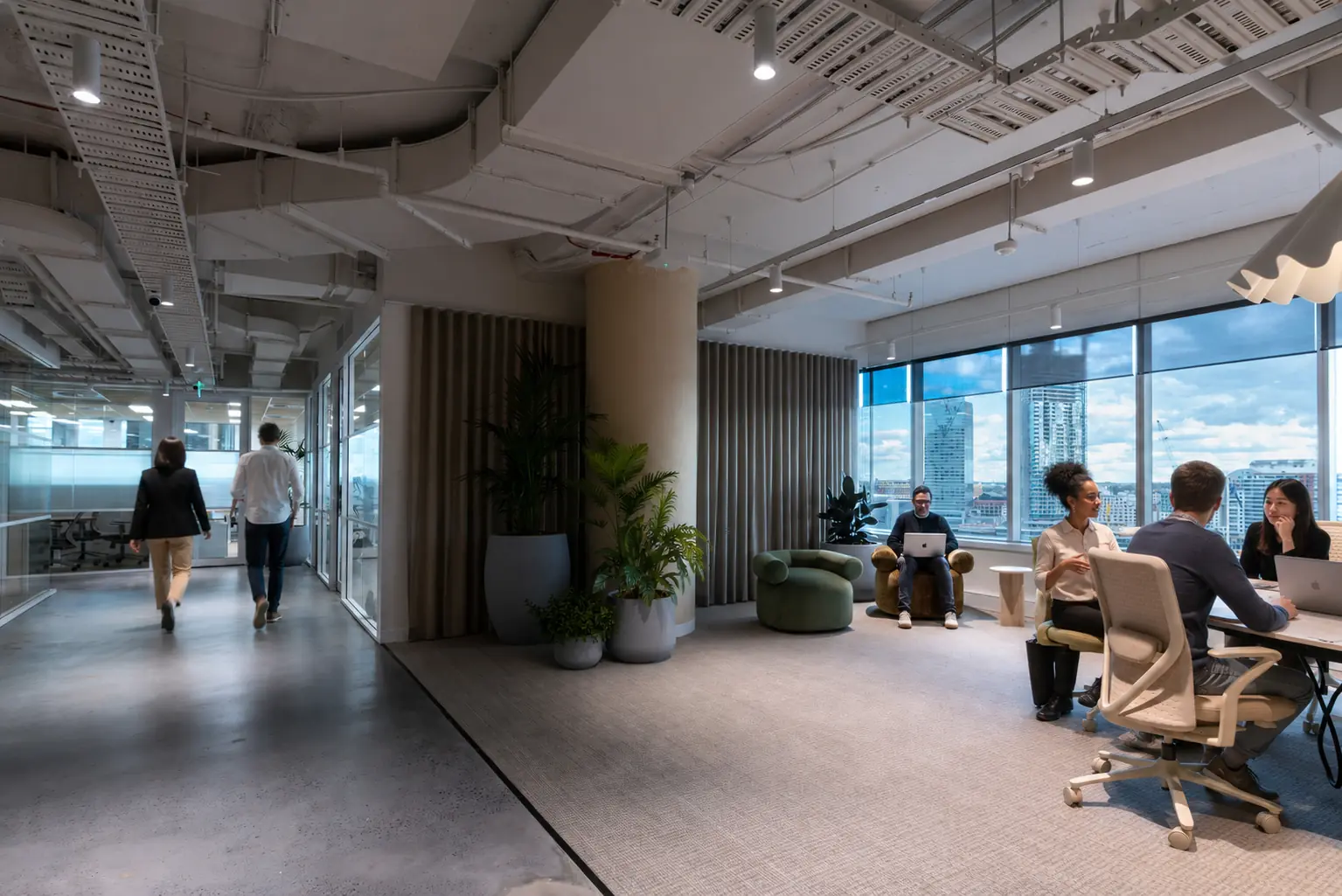
Effective creative workspace design provides a mix of settings, including:
- Private spaces for focused work
- Collaborative areas for ideas and workshops
- Professional meeting rooms for client presentations
- Informal spaces for quick conversations
- Production areas for content and project delivery
- Event spaces for launches, showcases and community gatherings
When these environments work together, the office becomes more than an address. It becomes part of the agency’s creative operating system.
1. Fixed Layouts Restrict Creative Collaboration
Creativity is rarely a straight-line process. It develops through discussion, experimentation, feedback and spontaneous interaction.
Traditional office layouts often separate people into fixed desks, private rooms or departments. This can make collaboration feel scheduled and formal when it should be fast and natural.
Teams may have nowhere to spread out campaign materials, review designs together or move between group discussion and individual execution. Meeting rooms become overbooked, desks become improvised project areas, and valuable ideas are discussed in corridors because there is nowhere better to go.
Purpose-built collaborative office environments remove these obstacles. Flexible furniture, breakout areas and accessible meeting spaces allow teams to quickly assemble around a project and return to focused work when the session ends.
The right space does not create the idea, but it gives the idea room to move.
2. Open-Plan Offices Can Undermine Focus
Open-plan offices are often positioned as collaborative, but openness alone does not produce better teamwork.
Without quiet rooms, acoustic separation and dedicated focus areas, open environments can create constant interruptions. Conversations, calls, music and movement compete for attention, making detailed creative work more difficult.
Writers, designers, editors, developers and strategists all need periods of uninterrupted concentration. If the only available workspace is a noisy open floor, productivity falls and frustration rises.
Strong creative agency office spaces balance energy with control. They give people the ability to choose the right environment for the task, whether that means joining a team workshop or stepping into a quiet space to finish a critical piece of work.
3. Limited Meeting Rooms Affect Client Experience
An agency’s workplace communicates something before the presentation begins.
Clients notice the reception experience, meeting room quality, technology, privacy and overall atmosphere. A cramped or poorly equipped office can make an agency appear less established, even when its work is exceptional.
Standard offices frequently offer too few meeting rooms or spaces that were not designed for professional presentations. Teams may compete for bookings, meet clients in noisy areas or rely on technology that does not perform reliably.
Client-ready agency workplace needs typically include:
- Professionally presented meeting and boardrooms
- Reliable displays and video conferencing
- Strong internet connectivity
- Comfortable waiting and hospitality areas
- Privacy for confidential conversations
- Event spaces for launches, workshops and presentations
A professional setting reinforces confidence. It helps clients feel that the agency is prepared, capable and ready to manage important work.
4. Traditional Leases Reduce Flexibility
Creative agencies rarely grow in perfectly predictable increments.
A major account can create an immediate need for more desks. A project may require contractors for three months. A new production capability may introduce different spatial requirements. Conversely, the completion of a large campaign can temporarily reduce the number of people working from the office.
Traditional leases make these changes difficult. Agencies may be locked into a fixed footprint for several years, even if the space becomes too large, too small or poorly suited to the business.
This creates several risks:
- Paying for unused office space
- Running out of room during growth periods
- Expensive fitout changes
- Long lease commitments
- Difficult relocation processes
- Additional furniture and technology costs
Flexible workspaces allow agencies to adjust their footprint as the business changes. Teams can add offices, access extra meeting rooms or use project spaces without rebuilding their entire workplace strategy.
It is the workplace equivalent of maintaining a flexible squad. You have the right talent and resources available when the game changes.
5. Standard Offices Can Create Departmental Silos
Agency performance depends on specialists working together.
Strategy needs to connect with creative. Creative needs to understand production. Account management needs visibility across the entire project. When workplace design physically separates these functions, communication can slow down.
Teams may begin relying on scheduled meetings and digital messages for conversations that could have been resolved in minutes.
Thoughtful creative workspace design encourages useful interaction without forcing everyone into constant collaboration. Shared project areas, communal kitchens and informal meeting points help people exchange information naturally while private spaces remain available when concentration is required.
This balance strengthens creative alignment and reduces the risk of teams working in isolation.
6. Static Offices Struggle With Hybrid Work
Hybrid work has changed how agencies use physical space.
The office is no longer simply where people go to complete individual tasks. It has become a destination for collaboration, culture, learning, client engagement and team connection.
A conventional desk-heavy office may remain partially empty on quieter days and become overcrowded when the full team attends. The agency pays for a fixed environment that performs poorly at both ends of the occupancy spectrum.
Flexible creative agency office spaces can support hybrid teams through:
- Bookable meeting rooms
- Shared collaborative areas
- Private team offices
- Casual work settings
- Short-term project space
- Technology-enabled hybrid meetings
- Flexible access for employees and contractors
This creates a more consistent workplace experience, regardless of how many people attend on a particular day.
7. Conventional Fitouts Can Date Quickly
Creative agencies need to look current, capable and culturally relevant. However, conventional office fitouts are expensive and can become outdated well before the lease ends.
Furniture, meeting technology and spatial requirements change. Brand identity evolves. Team structures shift. An office designed five years ago may no longer represent the agency or support how its people work today.
Updating a traditional office can involve significant capital, approvals and disruption.
Flexible office providers maintain shared areas, meeting rooms, technology and amenities as part of the overall workplace experience. This gives agencies access to a contemporary environment without carrying the full cost and operational burden of continual upgrades.
8. Office Management Distracts From Creative Work
Running an office involves more than paying rent.
Agencies must manage cleaning, internet, utilities, repairs, security, meeting room technology, deliveries and everyday workplace issues. As the team grows, so does the operational workload.
For a creative business, every hour spent fixing the office is an hour not spent developing ideas, strengthening client relationships or winning new work.
Serviced and flexible office environments bring these requirements together within one managed workplace. The agency gains a professional base while the workspace team handles much of the daily infrastructure.
This allows agency leaders to concentrate on their strongest work: building the team, serving clients and growing the business.
Why Flexible Workspaces Better Support Creative Agencies
The central advantage of a flexible workspace is choice.
Teams are not restricted to one desk, one room or one way of working. They can move between private offices, breakout spaces, meeting rooms, event venues and shared amenities according to the needs of each project.
For creative agencies, this can deliver:
- Greater flexibility as the team grows
- Better spaces for collaboration and focused work
- A more professional client experience
- Reduced upfront fitout costs
- Access to meeting rooms and event spaces
- Less time spent managing workplace operations
- Stronger opportunities for community and connection
A flexible workplace can also connect agencies with founders, technology companies, professional services firms and other potential collaborators. That wider business ecosystem can create referrals, partnerships and opportunities that rarely emerge from an isolated office.
What Creative Agencies Should Look for in Flexible Office Space
Not every flexible workspace will suit an agency. Decision-makers should assess the space against how their team genuinely operates.
A Variety of Work Settings
Look beyond desk numbers. Consider whether the workplace provides quiet areas, collaboration zones, private rooms and informal spaces.
Client-Ready Meeting Facilities
Review the quality of meeting rooms, technology, privacy, presentation equipment and hospitality experience.
Scalability
Confirm how easily the agency can add desks, expand into another office or access temporary project space.
Reliable Technology
Strong connectivity, video conferencing and responsive technical support are essential for modern agency work.
Brand Alignment
The environment should feel consistent with the agency’s positioning and the expectations of its clients.
Access and Location
Consider public transport, nearby amenities, accessibility and whether the location is convenient for employees and clients.
Community and Events
A strong business community can extend the value of the office through introductions, education, events and commercial opportunities.
Build a Workplace Around the Work
Creative agencies perform at their best when their environment supports the full creative process, from concentrated thinking to energetic collaboration and polished client delivery.
Standard offices often force agencies to adapt their work to the building. Flexible office space reverses that relationship by allowing the workplace to adapt to the team.
CorporateCubes.Co provides sophisticated, flexible office environments designed for businesses that need privacy, professionalism and room to grow. With private offices, collaborative spaces, premium meeting rooms and managed workplace services, agencies can build a workplace experience around their people, projects and clients.
Explore CorporateCubes.Co flexible office solutions or book a tour to find a workspace that gives your agency room to create, connect and grow.
FAQ’s
What are creative agency office spaces?
Creative agency office spaces are workplaces designed to support the way creative teams develop and deliver work. They typically combine private offices, collaborative areas, quiet zones, meeting rooms and client presentation facilities rather than relying on a single fixed layout.
Why are standard offices limiting for creative agencies?
Common office space limitations include rigid layouts, insufficient meeting rooms, poor acoustic control, long lease commitments and limited capacity to accommodate changing project teams. These constraints can reduce collaboration, focus and operational flexibility.
What should be included in creative workspace design?
Effective creative workspace design should include areas for focused work, team collaboration, informal discussion, confidential meetings, client presentations and content production. The exact mix should reflect the agency’s team structure and project workflow.
Are flexible workspaces suitable for hybrid creative teams?
Yes. Flexible workspaces can give hybrid teams access to private offices, meeting rooms and collaborative environments when they attend the workplace. This allows agencies to support changing attendance levels without maintaining an unnecessarily large fixed office.
Can flexible office space support agency growth?
Flexible office space can allow an agency to add desks, access additional rooms or expand into a larger office as its team grows. This reduces the need to predict long-term space requirements before signing a lease.
How can office space improve the client experience?
A professional workplace with high-quality meeting rooms, reliable presentation technology, strong hospitality and appropriate privacy can strengthen client confidence. It also gives agencies more options for presentations, workshops, launches and strategic sessions.
Is flexible office space more cost-effective than a traditional lease?
It can be, particularly when the cost of fitout, furniture, utilities, meeting facilities, cleaning, technology and office management is considered. Agencies should compare the total occupancy cost rather than rent alone.