

Author
Michael Benson
CEO of Cubes.Co
How Coworking Memberships Support Team Productivity
Growing teams need more than desks and Wi-Fi. They need a workplace that helps people communicate, concentrate, collaborate and perform without creating unnecessary operational complexity.
That is where coworking memberships have become a powerful workplace solution.
By providing flexible access to professional shared workspaces, meeting rooms, private areas and business amenities, coworking memberships allow organisations to create a productive working environment without committing to a rigid traditional lease.
For operations managers and workplace leaders, the advantage is clear. The team gets the space and support required to perform, while the business maintains the workplace flexibility needed to respond to changing headcount, hybrid schedules and future growth.
What are coworking memberships?
Coworking memberships provide individuals and teams with access to professionally managed workspaces under a flexible membership agreement.
Depending on the provider and membership type, this access may include:
- Shared work lounges
- Dedicated desks
- Private offices
- Meeting and boardrooms
- Quiet spaces and focus areas
- Breakout and collaboration zones
- High-speed internet
- Printing and business services
- Kitchens and hospitality amenities
- Events and professional communities
- Access across multiple locations
Unlike a conventional office lease, coworking memberships can often be adjusted as a team grows, contracts or changes its working patterns.
This makes them particularly valuable for growing businesses that need a professional workplace today without trying to predict exactly what their team will look like several years from now.
How coworking memberships improve team productivity
1. They create a clear environment for focused work
Working remotely can be highly effective, but not every home environment supports sustained concentration. Household distractions, unsuitable furniture, unreliable technology and limited separation between work and personal life can gradually affect performance.
Coworking memberships give employees access to a workplace designed specifically for productive work.
Professional lighting, ergonomic furniture, dependable connectivity and clearly defined working areas help employees move into work mode more easily. The physical change in environment can also create a stronger psychological boundary between personal time and professional responsibilities.
For teams, this means fewer preventable distractions and a more consistent working experience.
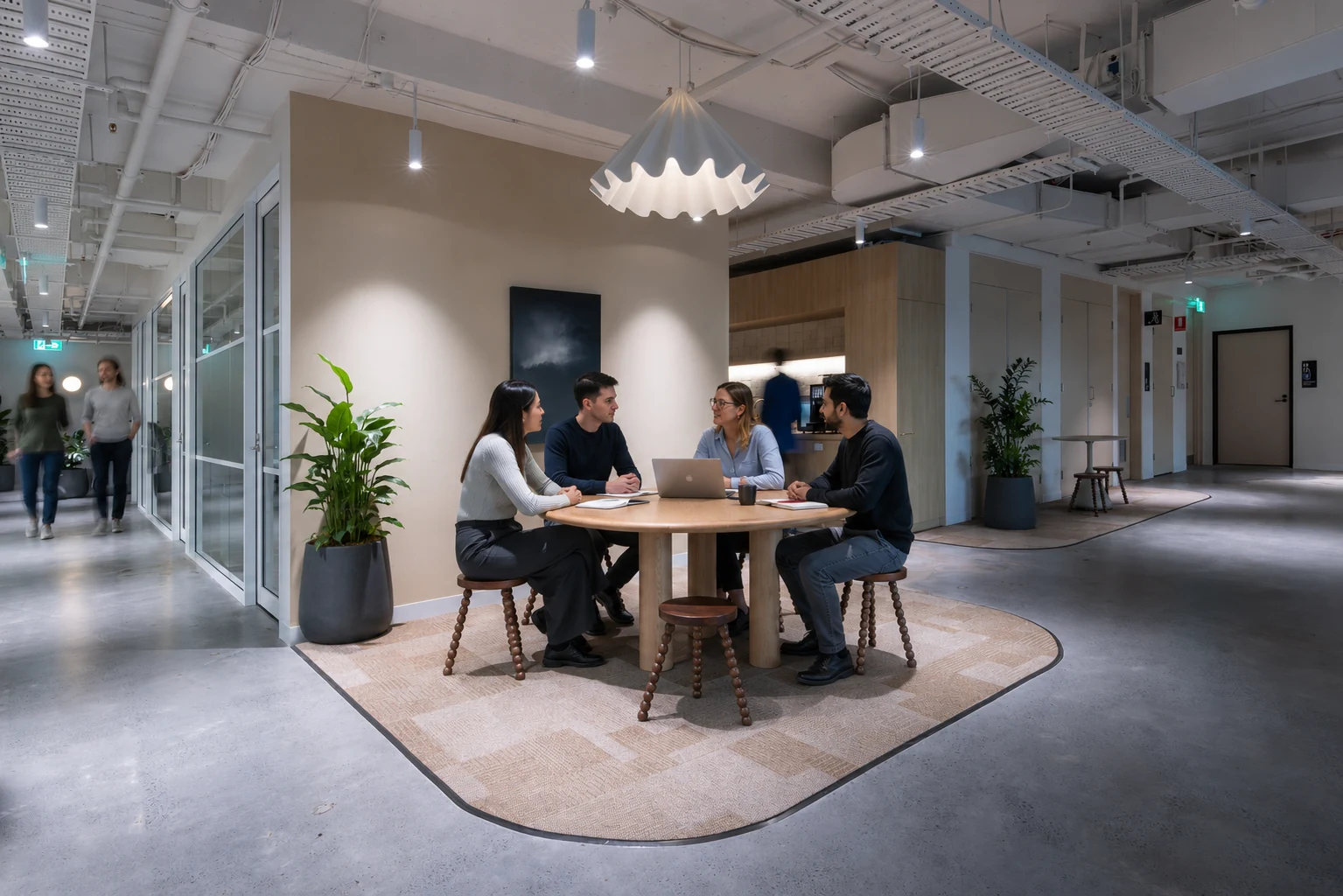
2. They strengthen team collaboration
Digital platforms make it possible to communicate from almost anywhere. However, some conversations are simply faster and more productive when people are in the same room.
Coworking memberships give teams a reliable place to:
- Run planning sessions
- Solve complex problems
- Review projects
- Brainstorm new ideas
- Conduct workshops
- Onboard new employees
- Share informal conversations
- Reconnect around common priorities
Strong team collaboration is not created by forcing everyone into an office five days a week. It comes from giving people a compelling, well-equipped place to work together when face-to-face interaction will produce a better result.
A coworking environment allows businesses to make office time more purposeful. Instead of commuting merely to sit on separate video calls, employees can use their shared time for decisions, relationships and work that benefits from collective energy.
3. They support different styles of work
Productivity is rarely achieved through one type of workspace.
During the same day, an employee may need to complete focused individual work, join a confidential call, collaborate with colleagues and meet with a client. A single open-plan desk cannot support every one of those activities equally well.
Well-designed shared workspaces provide different settings for different tasks, including:
- Quiet areas for concentration
- Phone booths for private calls
- Meeting rooms for structured discussions
- Breakout spaces for informal collaboration
- Private offices for team-based work
- Lounges for networking and relationship building
This variety allows employees to select the environment that best suits the work in front of them. It is similar to selecting the right position on a sporting field. Performance improves when people are placed where they can contribute most effectively.
4. They make hybrid work more consistent
Hybrid work can create an uneven employee experience.
Some people may have access to a polished central office, while others work from homes, cafés or temporary spaces. This inconsistency can affect communication, workplace culture and an employee’s sense of connection to the organisation.
Coworking memberships can establish a more reliable workplace experience across a distributed team. Employees know where they can work, what facilities will be available and how to access the spaces they need.
For growing teams, this consistency can support:
- More predictable collaboration days
- Better meeting experiences
- Stronger participation in team activities
- Improved access to professional facilities
- Greater equity between office-based and remote employees
The goal is not to remove flexibility. It is to give flexibility a stronger operating structure.
Why workplace flexibility matters for growing teams
Growing businesses rarely develop in a perfectly straight line.
A team may recruit quickly after securing a major contract, establish a project group in another city or need temporary space while evaluating a new market. A fixed office can make these changes expensive and operationally difficult.
Coworking memberships allow organisations to align their workspace more closely with actual business requirements.
Scale without relocating the entire team
A business can begin with a small number of memberships and add private offices, desks or meeting room access as the team expands.
This can reduce the pressure to lease a large office before it is genuinely required. It also helps avoid the opposite problem, where a team becomes trapped in a workspace it has already outgrown.
Adapt to changing attendance patterns
Not every employee needs a permanent desk every day.
Coworking memberships can help workplace leaders provide access based on how the team genuinely works. This may involve a combination of private offices, shared memberships, meeting rooms and flexible day access.
The result can be a more efficient workplace strategy that supports employees without paying for large areas that remain empty for much of the week.
Enter new markets with less friction
When a growing business hires employees or begins serving clients in another city, coworking memberships can provide an immediate professional base.
The organisation can establish a local presence, host meetings and support employees without first sourcing, fitting out and operating another conventional office.
Team-friendly amenities that improve performance
Amenities should do more than make a workplace look impressive. The best amenities remove friction from the working day and help people use their time effectively.
Meeting and boardrooms
Professional meeting rooms allow teams to hold structured conversations without interruptions. They also provide an appropriate setting for clients, investors, partners and job candidates.
Access to the right meeting environment can improve preparation, confidentiality and the overall quality of the interaction.
Reliable workplace technology
Fast internet, presentation screens, video-conferencing equipment and printing services are fundamental productivity tools.
When these systems are properly maintained, employees can focus on their work instead of troubleshooting basic technology. Few things drain momentum faster than spending the first 15 minutes of a meeting trying to make the screen work.
Breakout and collaboration spaces
Not every productive conversation needs a formal boardroom.
Informal areas allow employees to step away from their desks, exchange ideas and resolve issues quickly. These spaces can support the spontaneous conversations that are often missing from fully remote working arrangements.
Wellness and end-of-trip facilities
Depending on the location, coworking memberships may include access to gyms, showers, secure bicycle storage and wellness facilities.
These amenities can help employees integrate movement and wellbeing into their working day while making active commuting more practical.
Hospitality and community experiences
Kitchens, cafés, lounges and member events can help people build relationships beyond their immediate team.
For growing organisations, this wider business community may lead to introductions, partnerships, referrals and new ideas. Employees are not simply occupying an office. They are participating in a broader professional ecosystem.
How coworking memberships reduce operational distractions
Productivity is affected by more than individual effort. It is also influenced by how much time a team spends dealing with its workplace.
A traditional office can require someone to coordinate:
- Internet and utility providers
- Cleaning and maintenance
- Furniture and equipment
- Access systems
- Meeting room technology
- Deliveries and reception
- Repairs and facility issues
- Health, safety and compliance requirements
In a professionally managed coworking environment, many of these responsibilities are handled by the workspace team.
This allows operations managers to spend less time managing facilities and more time supporting the business. Employees also benefit because workplace problems can be resolved without becoming another internal project.
Coworking memberships and employee engagement
A productive team is not simply a busy team. People perform at their best when they feel connected, supported and clear about their role within the organisation.
Coworking memberships can support employee engagement by giving teams a shared place to build relationships and reinforce culture.
This is particularly important for growing teams, where new employees may join quickly and have limited opportunities to learn from colleagues through everyday interaction.
Regular coworking days can support:
- Stronger relationships between team members
- Faster onboarding and knowledge sharing
- Greater visibility across roles and departments
- More spontaneous coaching and mentoring
- A stronger sense of organisational identity
- Better connection for remote and hybrid employees
The workplace becomes a cultural touchpoint rather than simply a location.
How to choose coworking memberships for your team
Not every coworking membership will suit every organisation. Workplace leaders should assess how the team operates before comparing membership options.
Understand how your team works
Start by identifying:
- How many employees need workspace access
- How frequently they expect to attend
- Which days are likely to have the highest attendance
- How much focused, collaborative and confidential work they perform
- Whether they regularly host clients or partners
- Which locations are most convenient
- Whether the team is likely to grow
This provides a practical foundation for evaluating different membership structures.
Inspect the available workspace settings
A strong coworking environment should support more than one mode of work.
During a tour, review the availability and quality of quiet zones, phone booths, meeting rooms, collaboration areas, private offices and social spaces.
Consider whether employees can move naturally between these settings throughout the day.
Review meeting room access
Ask how meeting rooms are booked, how much access is included and what happens when the included allowance is used.
For collaborative teams, insufficient meeting room access can quickly become a productivity constraint.
Consider privacy and security
Teams working with sensitive information should understand the provider’s approach to:
- Secure internet access
- Building and floor access
- Confidential conversations
- Private document storage
- Visitor management
- After-hours access
A flexible workspace should still meet the organisation’s professional and operational standards.
Evaluate location and accessibility
The best workspace is only effective if employees can use it conveniently.
Consider proximity to public transport, parking, cycling facilities, cafés, clients and other business destinations. If the team operates across several cities, multi-location access may provide additional value.
Review membership flexibility
Clarify how easily the organisation can add or remove memberships, move into a larger office or access additional locations.
Growing teams should avoid solving today’s workplace problem by creating tomorrow’s constraint.
Measuring the impact on team productivity
Coworking memberships should produce observable improvements for the team and the business.
Workplace leaders can monitor practical indicators such as:
- Workspace attendance and utilisation
- Employee satisfaction
- Meeting room usage
- Team collaboration frequency
- Project turnaround times
- Employee retention
- Travel time and location convenience
- Client meeting activity
- Technology and facility issues
- Cost per active workspace user
Employee feedback is equally important. Ask team members which spaces they use, what helps them perform and where friction still exists.
Productivity is not measured by how long someone sits at a desk. It is measured by whether the workplace helps people produce high-quality outcomes efficiently and consistently.
Are coworking memberships right for your growing team?
Coworking memberships can be an effective choice for organisations that value agility, professional facilities and a better hybrid working experience.
They are particularly well suited to:
- Teams experiencing rapid or uncertain growth
- Businesses moving from remote work into a hybrid model
- Organisations with employees across multiple locations
- Project teams needing temporary workspace
- Companies entering a new market
- Teams that regularly meet clients
- Businesses seeking to reduce office administration
- Organisations that have outgrown their current workspace
The right coworking membership brings together the professional structure of an office and the flexibility required by a modern growing business.
Build a more productive workplace with CorporateCubes.Co
CorporateCubes.Co provides flexible, professional workspaces designed for growing teams, established businesses and enterprise organisations.
With access to private offices, meeting rooms, business lounges, collaboration spaces and premium workplace amenities, teams can work productively without carrying the complexity of a conventional office lease.
Whether you are supporting a hybrid team, entering a new market or preparing for your next stage of growth, CorporateCubes.Co can help you create a workspace strategy that moves with your business.
Explore CorporateCubes.Co locations or contact the CorporateCubes.Co team to discuss the right coworking membership for your organisation.
Frequently asked questions
What is included in a coworking membership?
Inclusions vary by provider and membership level. A coworking membership may include access to shared work areas, private offices, meeting rooms, phone booths, high-speed internet, kitchens, printing facilities, member events and professional business amenities.
How do coworking memberships improve team productivity?
Coworking memberships give employees access to purpose-built work environments for focused work, meetings and collaboration. They can also reduce distractions, improve workplace technology and remove the operational burden of managing a traditional office.
Are coworking memberships suitable for growing teams?
Yes. Coworking memberships are particularly suitable for growing teams because workspace access can often be adjusted as headcount and working patterns change. This provides greater flexibility than committing to a fixed office designed around uncertain future requirements.
Can coworking memberships support hybrid work?
Coworking memberships can provide hybrid employees with a consistent, professional place to work and meet. Teams can use the workspace for collaboration days, planning sessions, client meetings and individual focused work while retaining flexibility around when and where employees work.
What should workplace leaders compare between coworking providers?
Workplace leaders should compare location, accessibility, workspace quality, privacy, meeting room availability, included amenities, technology, community, contract terms, pricing and the ability to scale membership access.
Do coworking memberships include private meeting rooms?
Many coworking memberships include a meeting room allowance or provide meeting rooms that can be booked separately. The exact inclusions, booking rules and additional charges should be confirmed before selecting a membership.
Are coworking spaces secure enough for professional teams?
Professional coworking providers commonly use controlled building access, secure networks, visitor procedures and private workspace options. Businesses handling confidential information should assess the provider’s specific privacy, technology and security arrangements.
Can a business combine coworking memberships with a private office?
Yes. Many growing teams combine a private office with access to shared lounges, meeting rooms and flexible common areas. This gives the team a secure base while retaining the broader amenities and energy of a shared workspace.