

Author
Michael Benson
CEO of Cubes.Co
Coworking Memberships for Team Collaboration
Growing teams need more than somewhere to sit.
They need a workplace that makes it easier to communicate, collaborate and perform without locking the business into an office that may no longer suit its needs in six or twelve months.
That is where coworking memberships can deliver real value. The right membership combines professional workspaces, shared facilities, flexible access and a connected business community in one scalable solution.
However, not every coworking membership is designed for team collaboration. Some provide little more than a desk and Wi-Fi. Others create an environment where people can work independently, gather quickly, meet clients professionally and build stronger working relationships.
This guide explains which coworking membership features matter most for growing teams and how workplace decision makers can identify a shared workspace that supports productivity, flexibility and sustainable growth.
What Is a Coworking Membership?
A coworking membership gives an individual or team access to a professionally managed shared workspace under a flexible agreement.
Depending on the provider and membership type, access may include:
- Shared work areas
- Dedicated desks
- Private offices
- Meeting and boardrooms
- Breakout spaces
- Business lounges
- Phone booths
- Event spaces
- High-speed internet
- End-of-trip facilities
- Community events
- Access to multiple locations
Unlike a traditional office lease, coworking memberships often package the workplace, amenities, technology and operational support into one recurring fee.
This can remove much of the time, cost and administration involved in establishing and managing an independent office. For growing teams, it also creates the flexibility to increase or reduce workspace requirements as circumstances change.
How Coworking Memberships Improve Team Collaboration
Collaboration rarely improves simply because people are placed in the same room.
Effective team collaboration requires a mix of planned interaction, informal communication, focused individual work and access to the right spaces at the right time.
Well-designed coworking memberships support each of these working modes. A team can begin the day working independently, move into a meeting room for a project discussion, use a breakout area for a quick problem-solving session and host a client presentation without leaving the building.
This variety reduces friction.
Instead of trying to make one fixed office perform every function, teams can choose the environment that best suits the task. Like a high-performing sporting team, people need both a strong home base and enough space to execute their individual roles.
The Coworking Membership Features That Matter Most
1. Flexible Access for Different Working Patterns
Growing teams rarely follow one uniform schedule.
Some employees may work from the office every day. Others may split their time between home, client locations and the workplace. Team members may also need occasional access outside standard business hours.
A strong coworking membership should accommodate these different patterns through features such as:
- Full-time and part-time access
- Flexible day allocations
- 24/7 building access
- Casual passes for remote employees
- Short-term membership options
- The ability to add or remove members
This level of workplace flexibility helps businesses provide reliable office access without paying for permanently unused space.
When comparing memberships, decision makers should examine how access is counted. Some providers allocate access by person, while others base it on the number of desks or days used. The best structure will depend on how frequently the team attends and whether everyone needs access at the same time.
2. A Choice of Collaborative Spaces
One open workspace cannot support every type of collaboration.
Creative discussions, confidential conversations, online meetings and client presentations each require a different setting. Coworking memberships should therefore provide access to a useful mix of spaces.
Look for:
- Informal breakout areas
- Enclosed meeting rooms
- Boardrooms
- Phone booths
- Project spaces
- Business lounges
- Event and presentation spaces
- Quiet areas for focused work
The important question is not simply whether these spaces exist. It is whether members can access them when needed.
Review the booking system, usage allowances, availability and additional charges. A meeting room that is always booked or priced beyond regular use will add limited practical value to the team.
3. Private Space for Focused and Confidential Work
Shared workspaces can encourage interaction, but growing teams still need privacy.
Employees may handle commercial information, client data, financial discussions or sensitive internal matters. Constant noise and interruption can also reduce concentration and team productivity.
The most effective coworking memberships balance connection with privacy through:
- Lockable private offices
- Sound-managed meeting rooms
- Private phone booths
- Secure storage
- Quiet working zones
- Controlled building access
- Reliable IT security
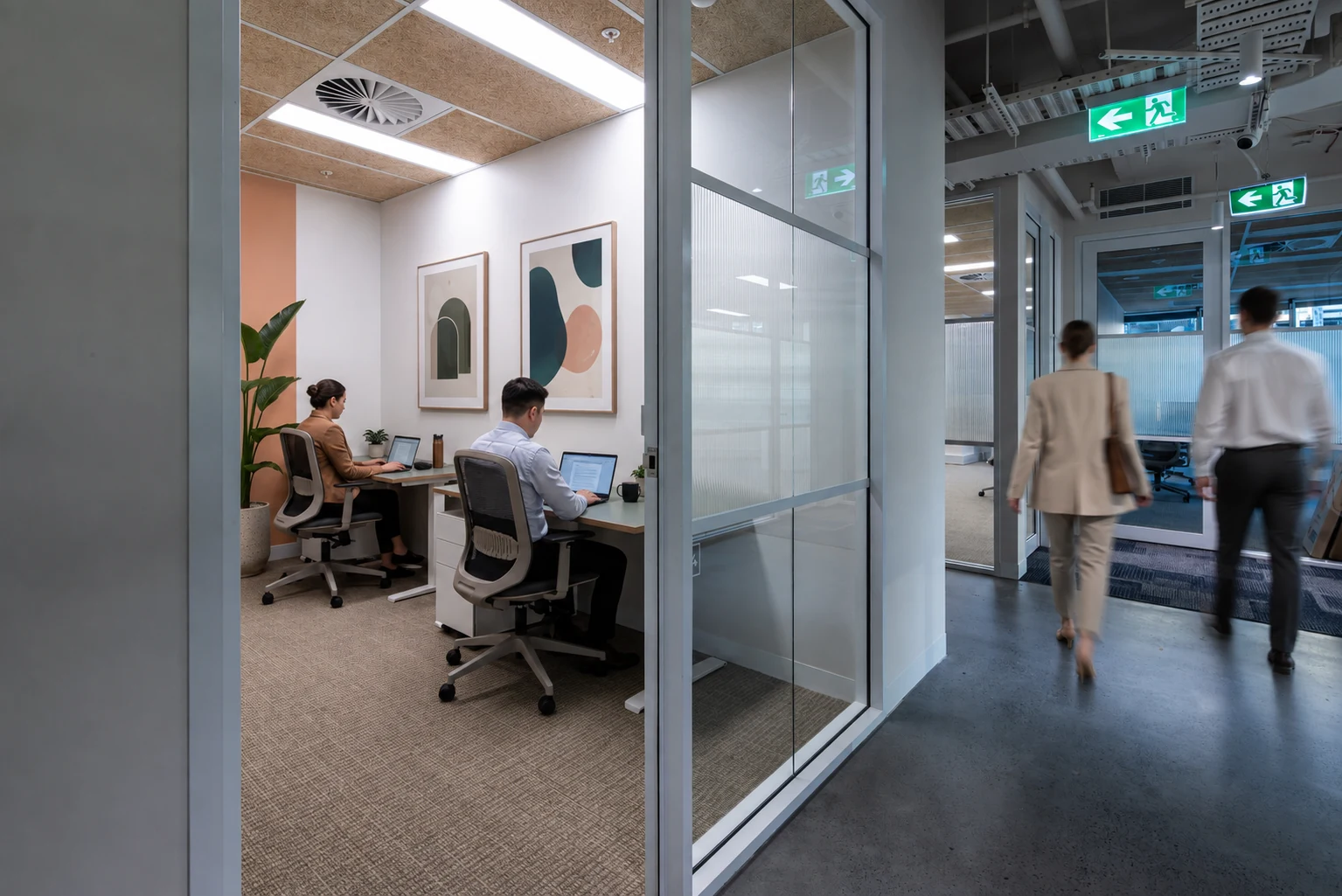
For teams completing confidential or concentration-intensive work, a private office within a broader coworking environment can provide the strongest balance.
The team receives a secure home base while maintaining access to shared facilities, community activities and flexible spaces throughout the building.
4. Reliable Technology and Connectivity
Technology should make collaboration seamless.
Poor internet, limited video conferencing facilities or complicated room-booking systems create delays and frustration. Across a growing team, those small interruptions can quickly become a meaningful productivity cost.
Before choosing a coworking membership, assess:
- Internet speed and reliability
- Wi-Fi coverage throughout the workplace
- Video conferencing capabilities
- Meeting room displays
- Printing and scanning access
- Room and desk booking technology
- Guest registration processes
- IT support
- Backup connectivity
The technology should be simple enough that employees can arrive, connect and begin working without requiring ongoing assistance.
5. Multi-Location Access
As teams expand, employees and clients may no longer operate from one suburb or city.
Coworking memberships with multi-location access allow people to work closer to home, meet clients in convenient locations and remain productive while travelling. This can be particularly valuable for businesses operating across Melbourne, Sydney, Adelaide or other Australian markets.
A multi-location network can support:
- Distributed and hybrid teams
- Interstate travel
- Client meetings
- Recruitment across wider geographic areas
- Business continuity
- Expansion into new markets
Check whether access to other locations is included, discounted or charged separately. Businesses should also confirm whether the standard of workspace, technology and service remains consistent across the network.
6. Simple Meeting Room Access
Meeting rooms are central to team collaboration, but the membership rules surrounding them can vary significantly.
Some coworking memberships include a monthly allowance. Others charge by the hour or require members to purchase additional credits.
Workplace decision makers should ask:
- How many meeting room hours are included?
- Can unused credits roll over?
- What does additional access cost?
- How far in advance can rooms be booked?
- Are rooms available across multiple locations?
- Can external guests attend?
- What technology is included?
- Are larger boardrooms priced differently?
Estimate the team’s likely monthly usage before comparing providers. A lower base membership can become more expensive if regular meetings attract additional charges.
7. Amenities That Support the Working Day
Amenities are not simply decorative extras. The right facilities can make office attendance easier, more comfortable and more valuable.
Depending on the team, useful amenities may include:
- Kitchens and quality refreshments
- End-of-trip facilities
- Showers and change rooms
- Bicycle storage
- Wellness facilities
- On-site cafés
- Secure parking
- Outdoor spaces
- Reception and guest services
- Mail and package handling
A workplace that supports the full working day can encourage people to spend more purposeful time together.
The goal is not to select the longest amenities list. It is to identify which facilities remove friction for the team and improve the everyday workplace experience.
8. A Professional Environment for Clients
A workplace influences how clients, candidates and partners perceive a business.
Coworking memberships should give growing teams access to an environment that feels professional, considered and aligned with their brand.
Review the complete visitor experience:
- Building location and presentation
- Reception and arrival process
- Meeting room quality
- Guest Wi-Fi
- Catering options
- Accessibility
- Signage and way finding
- Surrounding transport and hospitality
A polished workplace can help a growing business present with the confidence and credibility of a much larger organisation.
9. Community and Business Connections
One of the strongest advantages of shared workspaces is access to a broader professional community.
A well-curated coworking environment can create opportunities to meet other founders, operators, advisers, suppliers and potential clients. These connections often develop through everyday interaction rather than formal networking alone.
Look for providers that actively support community through:
- Member introductions
- Business events
- Educational sessions
- Social gatherings
- Industry partnerships
- Member communications
- Dedicated community teams
Community should be valuable but optional. Teams still need control over when they participate and when they focus on their own work.
10. The Ability to Scale
Workspace requirements can change quickly when a business is growing.
A team may recruit new employees, launch a project, enter another city or restructure its hybrid working arrangements. A suitable coworking membership should make those changes easier to manage.
Ask the provider:
- Can additional memberships be added quickly?
- Can the team move into a larger private office?
- Are short-term project spaces available?
- Can membership types be combined?
- What happens if attendance patterns change?
- Are other locations available as the business expands?
- What notice is required to change the agreement?
Scalability is not only about taking more space. It is about having options.
Choosing Between Shared Desks, Dedicated Desks and Private Offices
Most coworking providers offer several membership structures.
Shared or Hot Desk Memberships
Shared desk memberships work well for individuals and hybrid employees who do not require a permanent workstation.
They can offer strong flexibility and cost efficiency, although they may be less suitable for teams that need to sit together consistently or store equipment on-site.
Dedicated Desk Memberships
A dedicated desk gives each member a permanent workstation within a shared environment.
This creates greater consistency while retaining access to communal facilities and the broader coworking community. It can suit small teams that want an established base without requiring a fully enclosed office.
Private Office Memberships
Private offices provide a secure, exclusive space for the team within a managed shared workspace.
They are often the best choice for growing teams that need privacy, brand presence and reliable seating while still benefiting from meeting rooms, amenities and flexible services.
Some businesses use a blended model. Core employees may work from a private office while remote or part-time team members use flexible memberships when they attend.
How to Compare Coworking Membership Costs
The advertised monthly price rarely tells the complete story.
To understand the actual value of coworking memberships, compare the full cost of access, services and operations.
Consider:
- Base membership fees
- Meeting room charges
- Printing allowances
- Internet and technology
- Guest access
- After-hours access
- Parking
- Storage
- Mail services
- Additional member fees
- Set-up costs
- Notice periods
- Security deposits
Then compare that total with the cost of leasing and operating an independent office, including furniture, internet, utilities, cleaning, maintenance, reception, meeting facilities and ongoing administration.
The best membership is not necessarily the cheapest. It is the one that gives the team the right mix of access, space, service and flexibility without paying for features it will not use.
Questions to Ask Before Signing
Before selecting a coworking provider, ask:
- Which membership structure best suits our attendance pattern?
- Can our team sit and work together?
- What meeting room access is included?
- Are private areas available for confidential work?
- Can we access multiple locations?
- What technology and IT support are provided?
- How easily can we add or remove members?
- Are there additional fees beyond the advertised price?
- What is the minimum commitment and notice period?
- Can we trial the workspace before committing?
Whenever possible, tour the location during a typical working day. This will give you a clearer understanding of noise, occupancy, room availability, community activity and the overall working environment.
Finding the Right Coworking Membership for Your Team
The right coworking membership should make work easier.
It should give employees the spaces they need, provide enough flexibility to support changing schedules and create more opportunities for meaningful collaboration. It should also allow the business to grow without repeatedly rebuilding its workplace strategy.
CorporateCubes.Co provides flexible workspace solutions for growing teams and established businesses across Australia. From coworking memberships and business lounges to private offices, meeting rooms and multi-location access, our spaces are designed to support productive work, professional connection and business growth.
Explore CorporateCubes.Co locations or book a tour to find the membership that fits your team.
FAQs
What is included in a coworking membership?
A coworking membership can include access to shared desks, private offices, meeting rooms, business lounges, high-speed internet, kitchens, printing facilities and community events. Inclusions vary between providers, so teams should confirm access limits and additional charges before joining.
Are coworking memberships suitable for growing teams?
Yes. Coworking memberships can give growing teams professional workspace without the long commitments and operational responsibilities associated with a traditional office lease. They can also make it easier to add employees, change membership types or move into a larger office.
How do coworking spaces improve team collaboration?
Coworking spaces can improve team collaboration by providing different environments for meetings, informal discussions, focused work and client presentations. Teams can choose the right setting for each activity instead of relying on one fixed workspace.
Are coworking memberships good for hybrid teams?
Coworking memberships are particularly well suited to hybrid teams because access can often be matched to actual attendance. Flexible passes, shared desks and multi-location options allow employees to use professional workspace when they need it.
Is a private office better than a shared coworking area?
It depends on the team’s requirements. A private office provides greater privacy, security and consistency, while shared areas can offer more flexibility and interaction. Many growing teams choose a private office within a coworking environment to receive the benefits of both.
How much do coworking memberships cost in Australia?
Pricing depends on the city, location, membership type, access level and included amenities. Businesses should compare total monthly costs, including meeting rooms, parking, storage, printing and additional member fees, rather than assessing the base price alone.
Can coworking memberships include access to multiple locations?
Some providers offer access to a network of locations as part of the membership or as an optional upgrade. This can benefit distributed teams, employees working closer to home and businesses operating across multiple Australian cities.
What should a team look for during a coworking tour?
Teams should assess workspace variety, noise levels, meeting room availability, internet connectivity, privacy, security, amenities and transport access. They should also consider whether the environment reflects how the team works and how the business wants to present itself.
Can coworking memberships increase team productivity?
They can. Professionally managed workspaces reduce operational distractions and give employees access to purpose-built areas for focus, meetings and collaboration. Productivity will depend on selecting a membership and environment that align with the team’s working patterns.
How flexible are coworking membership agreements?
Flexibility varies by provider. Some memberships operate monthly, while private offices may require longer commitments. Always review minimum terms, notice periods, cancellation conditions and the process for adding or removing members.