
Author
Michael Benson
CEO of Cubes.Co
Serviced Private Offices for Hybrid Work in Australia
Serviced private offices are becoming one of the most practical workspace solutions for growing businesses using hybrid work models. For operations managers and workplace leaders, the challenge is no longer just finding desks. Instead, the challenge is creating flexible office space that supports people, productivity, culture and client expectations without locking the business into long lease risk.
At first, a traditional office lease may seem like the safest path. It gives the business a fixed location, a clear floorplan and a sense of control. However, hybrid teams rarely use office space in a predictable way every day, which means a rigid lease can quickly create waste, friction and unnecessary cost.
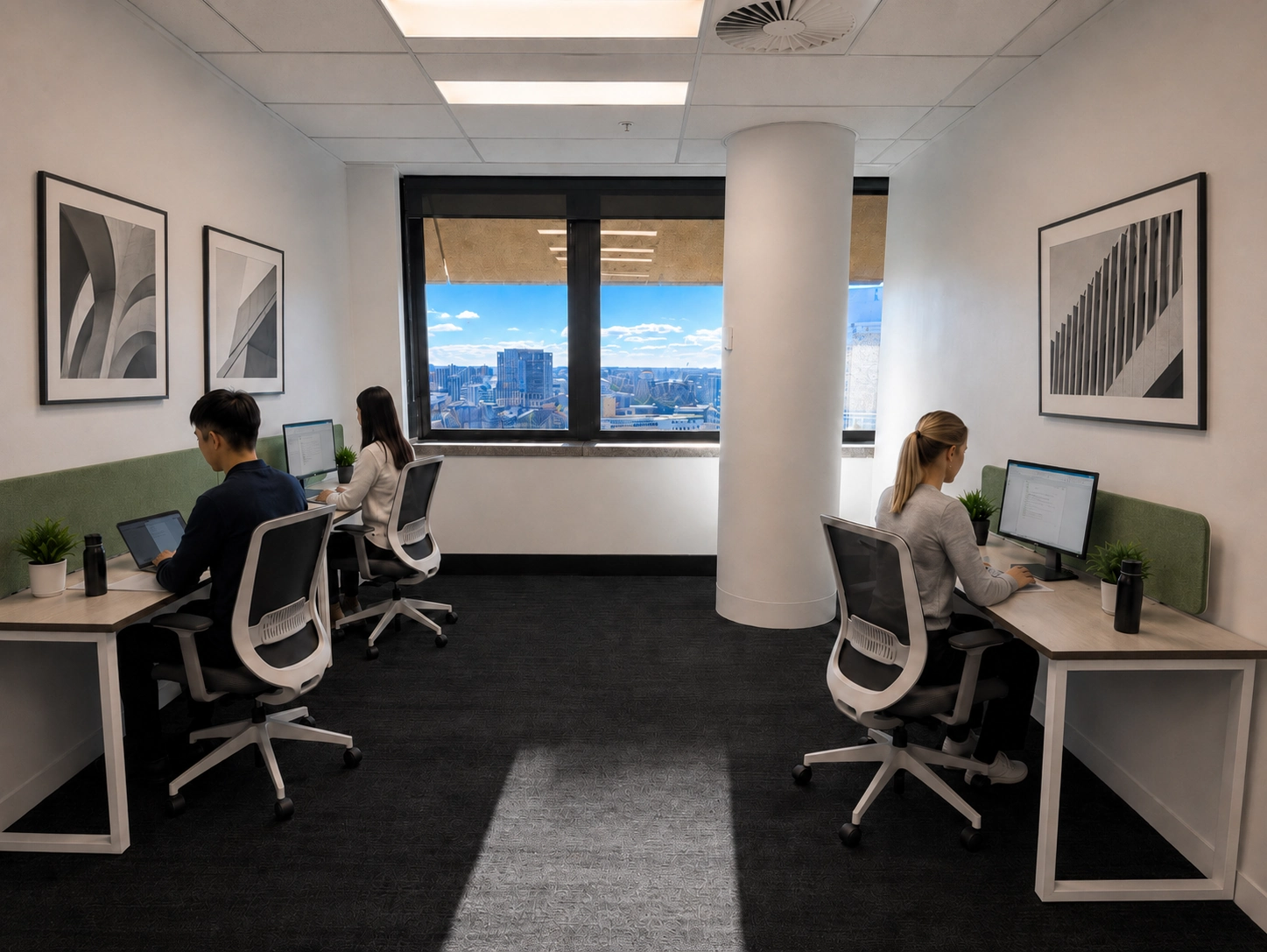
That is why serviced private offices are now a smarter option for many growing businesses. They provide move-in ready infrastructure, private workspace, shared amenities, meeting rooms, business lounges and flexible terms, all without the pressure of building and managing an office from scratch.
At CorporateCubes.Co, supported by the broader Cubes.Co ecosystem and the creative energy of CreativeCubes.Co, serviced private offices are designed for teams that need privacy, flexibility and professional infrastructure that can move with the business.
Why Serviced Private Offices Matter for Hybrid Work
Serviced private offices matter because hybrid work has changed the role of the office. The office is no longer just a place where every employee sits from 9 to 5. Instead, it has become a central base for collaboration, culture, client meetings, training, onboarding and focused team activity.
For growing businesses, that shift creates a new set of workspace challenges. Teams need privacy when the work demands it. They also need shared workspace access, meeting rooms, reliable technology and remote work infrastructure that supports people across different locations.
The best serviced private offices usually include:
- Lockable private office space
- Flexible office space access
- Move-in ready furniture
- High-speed internet
- Utilities included
- Cleaning and maintenance
- Meeting room access
- Business lounges
- Shared kitchen and breakout areas
- Reception and guest support
- Printing and office support
- Scalable private office rentals
- Access to coworking memberships
- Flexible terms that reduce long lease risk
Ultimately, the goal is simple. Give hybrid teams a professional home base without forcing the business to carry more space than it needs.
Like a strong sporting system, the best hybrid workspace gives you structure and rotation. Your serviced private office is the home ground, while meeting rooms, lounges and flexible workspace access give the team options when the match conditions change.
Best Ways to Use Serviced Private Offices for Hybrid Work
Below is a definitive guide to how growing businesses can use serviced private offices to support hybrid work models, reduce risk and create better workplace outcomes.
1. Use Serviced Private Offices as the Team Home Base
Best for: growing businesses that need a central workspace for leadership, culture and collaboration.
A serviced private office gives hybrid teams a reliable home base. Even when employees work remotely part of the week, the business still needs a professional environment where people can come together, meet clients, onboard staff and build team rhythm.
Unlike a casual coworking setup, serviced private offices provide secure and dedicated workspace. As a result, teams can leave equipment in place, create consistency and maintain a stronger sense of business identity.
Why a Team Home Base Works
Hybrid work models need more than flexibility. They also need coordination. Without a central place to gather, teams can lose momentum, communication can become fragmented and culture can become harder to maintain.
Serviced private offices solve that by giving the team a professional anchor. Meanwhile, flexible workspace access supports the days when not everyone needs to be in the office.
Best Features to Look For
- Lockable private office
- Flexible office space access
- Meeting rooms
- Business lounge access
- Shared breakout areas
- Secure internet
- Furniture included
- Reception and guest support
- Ability to scale as the team grows
For workplace leaders, this model creates stability without the weight of a traditional lease.
2. Use Serviced Private Offices to Reduce Long Lease Risk
Best for: operations managers, finance leaders and businesses with changing headcount.
Traditional private office leases often require long commitments, upfront fitout, furniture, utilities, maintenance and make-good obligations. For growing businesses, that can create risk, especially when team size, hybrid attendance and market conditions are still changing.
Serviced private offices reduce that risk by giving businesses access to ready-to-use private office rentals with more flexible terms.
Why Lower Lease Risk Matters
Hybrid teams do not always need the same amount of space every day. For example, a business may have 40 employees, but only 18 to 25 in the office on a typical day.
Because of that, signing a lease for every employee can create empty desks and wasted spend. By contrast, serviced private offices allow businesses to match workspace commitments more closely to real usage.
Best Features to Look For
- Flexible terms
- All-inclusive pricing
- Move-in ready infrastructure
- No major fitout requirement
- Scalable office options
- Meeting room access
- Shared amenities
- Ability to add or reduce space
- Clear monthly costs
This approach gives growing businesses more control and fewer property headaches. Less lease drama, more team momentum.
3. Use Serviced Private Offices with Coworking Memberships
Best for: hybrid teams with full-time staff, part-time staff, remote workers, contractors and travelling employees.
Many hybrid teams need a blend of dedicated space and flexible access. Serviced private offices can support the core team, while coworking memberships can support employees who only need office access occasionally.
This is especially useful for companies with distributed teams, flexible schedules or staff moving between locations.
Why Coworking Memberships Add Flexibility
A private office gives the business privacy and consistency. However, coworking memberships give the wider team movement.
For example, the leadership team may use the serviced private office regularly, while remote employees use coworking memberships when they come in for meetings, training or team days. In addition, travelling staff can access professional workspace without the business needing to lease more desks permanently.
Best Features to Look For
- Serviced private office access
- Coworking memberships
- Business lounges
- Day passes
- Meeting room access
- Multi-location access
- Simple booking tools
- Flexible team permissions
- Guest access
For growing businesses, this creates a sharper workspace model. The business gets a stable base without paying for space that sits empty.
4. Use Serviced Private Offices for Client-Ready Hybrid Work
Best for: professional services firms, consultants, advisors, agencies, sales teams and leadership groups.
Hybrid work does not remove the need for professional client-facing space. In fact, it often makes that space more important. When teams come together less often, the moments that happen in person need to count.
Serviced private offices help businesses host clients, partners and suppliers in a polished environment without needing to lease a large office.
Why Client-Ready Space Matters
A great client meeting starts before the first slide. The arrival experience, reception, meeting room quality, technology, privacy and hospitality all shape how the business is perceived.
Therefore, hybrid workspace solutions should include more than desks. They should also include boardrooms, meeting rooms, presentation technology and professional support.
Best Features to Look For
- Professional reception
- Client meeting rooms
- Boardrooms
- Video conferencing tools
- Guest Wi-Fi
- Catering options
- Business lounges
- Waiting areas
- Presentation screens
- Central locations
For client-facing teams, serviced private offices can create a home court advantage. When the space feels sharp, the conversation starts stronger.
5. Use Serviced Private Offices to Support Remote Work Infrastructure
Best for: teams balancing work-from-home, office attendance and distributed collaboration.
Remote work infrastructure is now a core part of workplace strategy. Teams need reliable systems, strong connectivity, video-ready rooms and professional environments that support both in-person and remote collaboration.
Serviced private offices make this easier because the infrastructure is already in place. Instead of building an office from the ground up, businesses can move into a workspace with internet, utilities, meeting rooms, shared amenities and support already handled.
Why Remote Work Infrastructure Matters
Hybrid teams rely on technology to stay connected. However, poor Wi-Fi, bad acoustics, weak meeting room technology or limited private call space can damage productivity quickly.
Serviced private offices help remove those blockers. As a result, teams can focus on work rather than troubleshooting the basics.
Best Features to Look For
- High-speed internet
- Video conferencing facilities
- Private call rooms
- Meeting rooms
- Quiet work areas
- Printing and office support
- Secure access
- Flexible workspace options
- On-site support team
For operations managers, this can save serious time. The less your team has to manage the office, the more they can manage the work.
6. Use Serviced Private Offices for Team Days and Collaboration
Best for: hybrid businesses that bring teams together weekly, fortnightly or monthly.
Many hybrid work models are built around intentional office days. Instead of asking people to attend every day, businesses bring teams together for planning, collaboration, training, workshops or culture-building moments.
Serviced private offices work well for this because they provide a consistent base, while shared workspace areas and meeting rooms support larger team activity when needed.
Why Team Days Work
Hybrid work can create flexibility, but it can also weaken connection if teams are not brought together with purpose. Therefore, office days need to be designed around outcomes, not attendance for the sake of it.
For example, a team may use its serviced private office for leadership alignment, then book a meeting room for workshops and use shared breakout areas for informal collaboration.
Best Features to Look For
- Private office for the core team
- Workshop-ready meeting rooms
- Breakout areas
- Business lounges
- Event or presentation spaces
- Catering options
- Whiteboards and screens
- Flexible booking options
- On-site support
When office time has purpose, people feel the difference. It becomes less about showing up and more about moving the work forward.
7. Use Serviced Private Offices to Scale Without Disruption
Best for: growing companies expecting headcount changes, new projects or expansion into new markets.
Growth rarely happens in a straight line. One quarter, the business may need more staff. The next, it may need a project team, client space, extra meeting rooms or access in another city.
Serviced private offices support this movement because they allow businesses to scale workspace without starting again every time the team changes.
Why Scalable Hybrid Workspace Solutions Work
A traditional lease locks the business into one footprint. However, hybrid workspace solutions can expand, contract or adapt as the company grows.
For instance, a business might start with one private office, add coworking memberships for flexible staff, then move into a larger office as the team expands. In addition, it can use meeting rooms, lounges and shared workspace areas without carrying all of that space permanently.
Best Features to Look For
- Scalable private office rentals
- Flexible office space
- Coworking memberships
- Meeting room access
- Multi-location options
- Shorter commitment options
- All-inclusive amenities
- Ability to add desks
- Business lounge access
This gives businesses room to grow without creating a property problem every time the team changes.
How Serviced Private Offices Support Hybrid Work Models
Serviced private offices support hybrid work models because they give businesses a more flexible way to balance privacy, access and cost.
With a traditional office, companies often lease space based on total headcount. However, hybrid teams usually need space based on actual usage, collaboration patterns and client needs.
Serviced private offices help businesses:
- Reduce long lease exposure
- Avoid large upfront fitout costs
- Access move-in ready infrastructure
- Provide a private base for core teams
- Support flexible staff with coworking memberships
- Host clients professionally
- Improve team collaboration
- Scale office space as headcount changes
- Support remote work infrastructure
- Reduce operational workload
- Improve cost visibility
As a result, workplace leaders can build a model that reflects how people actually work, not how offices used to be used.
How to Choose the Right Serviced Private Offices
The right serviced private offices depend on your team size, hybrid rhythm, client needs and growth plans.
Before choosing a workspace, ask:
- How many people need office access each week?
- How many people need permanent desks?
- How often does the team come together?
- Do we need private offices, coworking memberships or both?
- How often do we host clients?
- Do we need meeting rooms or workshop spaces?
- Is remote work infrastructure already included?
- Can the office scale as the team grows?
- Are flexible terms available?
- Does the workspace support our brand and culture?
- Will this reduce operational pressure on the team?
However, do not choose a workspace just because it fits today. Instead, choose one that can support the next stage of the business.
Why CorporateCubes.Co Supports Serviced Private Offices for Hybrid Work
CorporateCubes.Co is designed for growing businesses that need polished, flexible and scalable serviced private offices.
For operations managers and workplace leaders, the model provides private office rentals, flexible office space, client meeting rooms, business lounges, shared amenities and move-in ready infrastructure without the complexity of a long traditional lease.
Meanwhile, CreativeCubes.Co supports creative teams, startups and scaleups that need community, collaboration and energy. Together under Cubes.Co, the ecosystem gives businesses access to workspace, events, hospitality, media and broader support across a connected platform.
That combination makes serviced private offices more than a place to sit. It makes them part of a smarter hybrid workspace strategy.
Final Word on Serviced Private Offices
Serviced private offices are one of the clearest ways for growing businesses to make hybrid work practical.
They give teams a private, professional home base. At the same time, they provide flexible office space, meeting rooms, coworking memberships, shared amenities and remote work infrastructure that can support changing team needs.
Traditional leases still have their place. However, for many growing businesses, serviced private offices reduce risk, speed up setup and make it easier to scale without overcommitting.
Ultimately, the strongest hybrid workspace solutions give businesses structure without rigidity.
CorporateCubes.Co, CreativeCubes.Co and Cubes.Co are built for exactly that shift.
Explore Serviced Private Offices with CorporateCubes.Co
Explore serviced private offices, flexible office space, private office rentals and hybrid workspace solutions with CorporateCubes.Co.
Find the right workspace model for your growing team and give your business the infrastructure to perform.
FAQs About Serviced Private Offices
What are serviced private offices?
Serviced private offices are ready-to-use private workspaces inside a professionally managed office environment. They usually include furniture, internet, utilities, cleaning, meeting room access, shared amenities and front-of-house support.
Are serviced private offices good for hybrid teams?
Yes. Serviced private offices are well suited to hybrid teams because they provide a private home base while also supporting flexible office space, meeting rooms, coworking memberships and remote work infrastructure.
How do serviced private offices reduce lease risk?
Serviced private offices reduce lease risk by offering flexible terms, all-inclusive amenities and move-in ready infrastructure. As a result, businesses can avoid large upfront fitout costs, long commitments and unnecessary unused space.
What is the difference between serviced private offices and traditional private office leases?
Traditional private office leases usually require longer commitments, fitout, furniture, utilities and ongoing management. Serviced private offices provide ready-to-use space with many of those operational requirements already included.
Can serviced private offices support remote work infrastructure?
Yes. Serviced private offices can support remote work infrastructure through high-speed internet, meeting rooms, video conferencing tools, private call spaces and professional workspace support.
What should workplace leaders look for in serviced private offices?
Workplace leaders should look for flexible terms, reliable internet, meeting room access, private office rentals, business lounges, shared amenities, client-ready spaces and the ability to scale as team needs change.
Are serviced private offices better than coworking memberships?
Serviced private offices and coworking memberships serve different needs. Serviced private offices provide dedicated private space, while coworking memberships provide flexible shared workspace access. Many hybrid teams benefit from using both.
Why choose CorporateCubes.Co for serviced private offices?
CorporateCubes.Co provides serviced private offices for growing businesses that need flexible office space, private office rentals, meeting rooms, business lounges and hybrid workspace solutions. As part of the Cubes.Co ecosystem, it also connects teams with community, events and broader workspace support.