Author
Michael Benson
CEO of Cubes.Co
Flexible Workspace Solutions
Creative agencies do their best work when their environment supports the full creative process. That means providing space for deep thinking, spontaneous collaboration, client presentations, content production and the everyday momentum that keeps projects moving.
Yet many agencies are still working from rigid open-plan offices designed around desk capacity rather than creative performance.
Effective creative agency office space should offer more than an impressive fitout. It should give your team the flexibility to move between focus, collaboration, production and client-facing work without leaving the office or disrupting everyone around them.
For agencies exploring a more flexible environment, Creative workspace locations can provide access to move-in-ready offices, meeting rooms and shared facilities without the limitations of a traditional commercial lease.
What Is Creative Agency Office Space?
Creative agency office space is a purposefully designed workplace that supports the different ways creative teams operate.
Unlike a standard office built around rows of desks, an agency workspace may include:
- Private offices for focused work
- Collaboration zones for ideas and project reviews
- Meeting rooms for clients and presentations
- Quiet spaces for writing, strategy and editing
- Production areas for photography, video or podcasting
- Informal breakout spaces for spontaneous conversations
- Shared business facilities that can scale with the agency
The goal is not to create more space. It is to create the right mix of spaces.
A strong creative environment design allows people to select the setting that best suits the task in front of them.
Why Rigid Open-Plan Offices Limit Creative Agencies
Open-plan offices were designed to improve communication and maximise space. In practice, they can make it harder for creative teams to concentrate, hold confidential conversations or manage competing projects.
Common office limitations for agencies include:
Constant noise and interruption
Designers, strategists, writers, developers and account managers may all need different working conditions. A conversation that energises one team can interrupt another person trying to write, edit or solve a complex problem.
Limited privacy
Client discussions can involve confidential campaigns, commercial strategies, unreleased products or sensitive performance data. Holding these conversations in an open workspace creates unnecessary risk and distraction.
Inadequate client-facing areas
A client meeting should feel considered and professional. Meeting around a crowded desk or searching for an available café table can weaken the experience your agency has worked hard to create.
No dedicated production space
Many agencies now produce video, audio, photography and social content internally. A standard office may not provide the acoustic separation, lighting control, storage or room configuration these activities require.
Fixed layouts that cannot adapt
Creative teams change quickly. Headcount moves with new clients, campaigns and production schedules. A fixed office layout can become too small, too large or simply unsuitable long before the lease ends.
Start With How Your Agency Actually Works
Before selecting furniture or planning the floor, map how work moves through the agency.
Consider:
- How many people need focused individual work each day?
- How often do teams gather for brainstorming or project reviews?
- How many client meetings happen each week?
- Which roles regularly handle confidential information?
- Does the agency produce photography, video, audio or physical materials?
- How often do freelancers, contractors or remote team members attend?
- Is the team likely to grow or change during the next 12 to 24 months?
Good office design for creatives begins with behaviour, not aesthetics.
A beautiful office that does not support the team’s workflow is like a brilliant campaign with no distribution strategy. It may look good, but it will struggle to perform.
Create Dedicated Zones for Different Types of Work
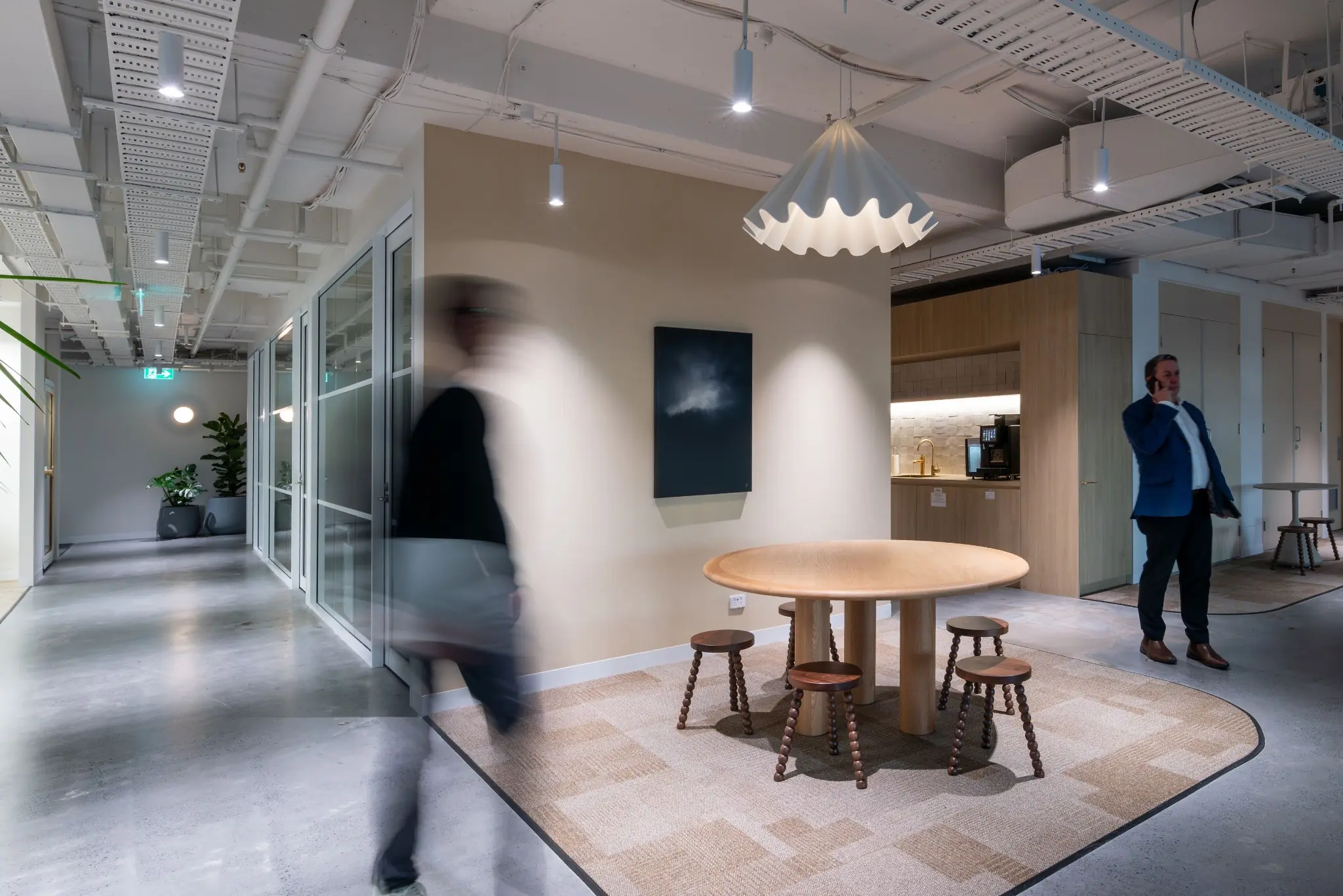
The strongest creative agency office space gives teams clear choices throughout the day.
1. Focus zones
Focus zones should support work that requires sustained concentration, including:
- Copywriting
- Graphic design
- Video editing
- Coding
- Research
- Campaign planning
- Financial and operational work
These zones should be positioned away from high-traffic areas and noisy collaboration spaces. Private offices, enclosed team rooms, quiet booths and acoustic treatments can all help reduce interruptions.
2. Collaboration zones
Collaboration areas should make it easy for teams to gather, share ideas and review work in progress.
Useful features include:
- Large tables
- Whiteboards
- Pin-up or display surfaces
- Digital screens
- Writable walls
- Flexible seating
- Reliable video-conferencing technology
The furniture should be easy to rearrange as team sizes and project requirements change.
Collaboration zones work best when they are intentionally energetic. The aim is to give ideas somewhere to collide without sending that noise across the entire office.
3. Client meeting zones
Client-facing spaces should communicate confidence, capability and attention to detail.
They should provide:
- Professional meeting rooms
- High-quality presentation screens
- Reliable video conferencing
- Comfortable seating
- Strong acoustic privacy
- Easy access for visitors
- Reception or arrival support
- Hospitality facilities
For agencies, the workplace is part of the brand experience. Clients should understand the agency’s energy and professionalism from the moment they arrive.
4. Production zones
Studio space requirements will vary according to the work being produced.
A production zone may need:
- Controlled lighting
- Acoustic separation
- Neutral backdrops
- Equipment storage
- Additional power access
- High-speed internet
- Space for cameras, microphones and crew
- Easy loading or equipment access
Not every agency needs a permanent production studio. Flexible workspace solutions can provide access to specialised rooms or adaptable spaces only when they are required.
This can prevent an agency from paying for underused production space throughout the year.
5. Informal breakout zones
Some of the strongest ideas emerge outside formal meetings.
Lounges, cafés, kitchens and outdoor areas can create natural opportunities for people to reset, connect and solve problems together.
These zones should feel relaxed without becoming disconnected from the working environment. They provide the change of pace creative teams often need to maintain energy across demanding projects.
Balance Brand Expression With Everyday Functionality
A creative agency office should feel distinctive, but brand expression should not come at the expense of performance.
Colour, artwork, signage and material selections can help communicate the agency’s personality. However, the workspace must also remain comfortable, practical and adaptable.
Prioritise:
- Natural light where possible
- Comfortable and ergonomic furniture
- Strong acoustic control
- Consistent temperature and ventilation
- Accessible power and charging points
- High-speed, reliable connectivity
- Storage that reduces visual clutter
- Clear pathways between work zones
The best creative environment design does not overwhelm people. It gives the brand a physical presence while allowing the work to remain the main event.
Use Flexible Furniture and Modular Layouts
Agency requirements can shift from one project to the next.
A campaign workshop may require one large collaborative table. The following day, the same team may need smaller groups for production planning and client feedback.
Flexible furniture makes these transitions easier.
Consider:
- Mobile tables
- Stackable or lightweight chairs
- Movable whiteboards
- Modular lounges
- Adjustable desks
- Portable screens
- Storage units that can also divide space
Modular layouts allow the workplace to respond to the agency instead of forcing the agency to work around the office.
Design for Hybrid Teams
Hybrid work has changed how creative agencies use physical space.
The office is no longer simply where every employee completes individual work five days a week. It has become a place for connection, collaboration, production, mentoring and client engagement.
A hybrid agency workspace should include:
- Reliable video-conferencing rooms
- Quiet areas for virtual calls
- Shared project spaces
- Drop-in workstations
- Team rooms for planned collaboration days
- Technology that supports remote participation
- Booking systems for rooms and desks
Hybrid office design should make remote team members feel included rather than positioned as observers.
Clear audio, appropriate camera placement and shared digital collaboration tools are critical when people are contributing from different locations.
Protect Confidentiality and Intellectual Property
Creative agencies routinely handle commercially sensitive information.
This can include:
- Unreleased campaigns
- Product launches
- Customer information
- Media strategies
- Brand repositioning
- Financial details
- Proprietary concepts and designs
The workspace should provide private rooms for confidential discussions and secure infrastructure for digital work.
When evaluating flexible workspace solutions, agencies should ask about:
- Secure internet options
- Controlled building access
- Private office security
- Visitor management
- Meeting-room privacy
- After-hours access
- Document storage
- Network and data-security protocols
Privacy should be designed into the workspace, not added after a problem appears.
Plan for Growth Without Overcommitting
Traditional leases can require agencies to predict their future headcount years in advance. That can be difficult in an industry where staffing levels respond to client wins, project pipelines and economic conditions.
A move-in-ready flexible office can reduce this pressure.
Instead of committing to a large fixed footprint, an agency may be able to:
- Start with a private team room
- Add offices as the team grows
- Book extra meeting rooms when required
- Accommodate contractors through day access
- Use event spaces for launches and presentations
- Access shared facilities without maintaining them internally
- Adjust its footprint as business conditions change
This creates greater agility while reducing the time and capital required to establish a traditional office.
Choose Move-In-Ready Creative Agency Office Space
Building an office from scratch can require significant time, planning and upfront investment.
Agencies may need to manage:
- Lease negotiations
- Design and construction
- Furniture procurement
- Internet installation
- Meeting-room technology
- Security systems
- Cleaning and maintenance
- Utilities and ongoing facility management
Move-in-ready creative agency office space brings these elements together within one managed solution.
This allows the agency to concentrate its energy and capital on people, clients and growth rather than managing an office fitout.
What to Look for in a Flexible Workspace Provider
When comparing workspace providers, creative agencies should look beyond the private office itself.
Evaluate the complete working environment, including:
- Location and transport access
- Private office quality
- Meeting-room availability
- Collaboration and breakout areas
- Internet speed and reliability
- Acoustic performance
- Production capabilities
- Reception and visitor support
- Kitchen and hospitality facilities
- Event-space access
- Flexibility to expand or contract
- Community and professional networks
- Transparent, all-inclusive pricing
- Access outside standard business hours
Tour the workspace during a normal working day where possible. This will help you understand the actual noise levels, energy, service and member experience.
How CorporateCubes.Co Supports Creative Agencies
CorporateCubes.Co provides flexible, move-in-ready workspace solutions for teams that need privacy, professional facilities and room to grow.
Creative agencies can combine their own private workspace with access to shared business amenities, including meeting rooms, breakout areas and client-facing facilities.
This model supports the different stages of agency work:
- Quiet space for strategy and execution
- Collaborative settings for ideas and reviews
- Professional rooms for client meetings
- Flexible facilities for production and presentations
- Shared spaces that encourage connection and momentum
- Scalable workspace options as team requirements change
Rather than locking an agency into one rigid layout, CorporateCubes.Co creates an adaptable base that can evolve with its people, projects and ambitions.
Build a Workspace That Helps Ideas Perform
Creative agencies do not need more desks. They need environments that help people move smoothly between concentration, collaboration, production and connection.
The right creative agency office space should protect focus, elevate the client experience and adapt as the agency changes.
When the workspace supports the way people actually work, creativity becomes easier to sustain and the entire agency gains momentum.
CorporateCubes.Co provides flexible, move-in-ready private workspace backed by professional facilities and scalable solutions. Explore a workspace designed to help your agency focus, collaborate and grow.